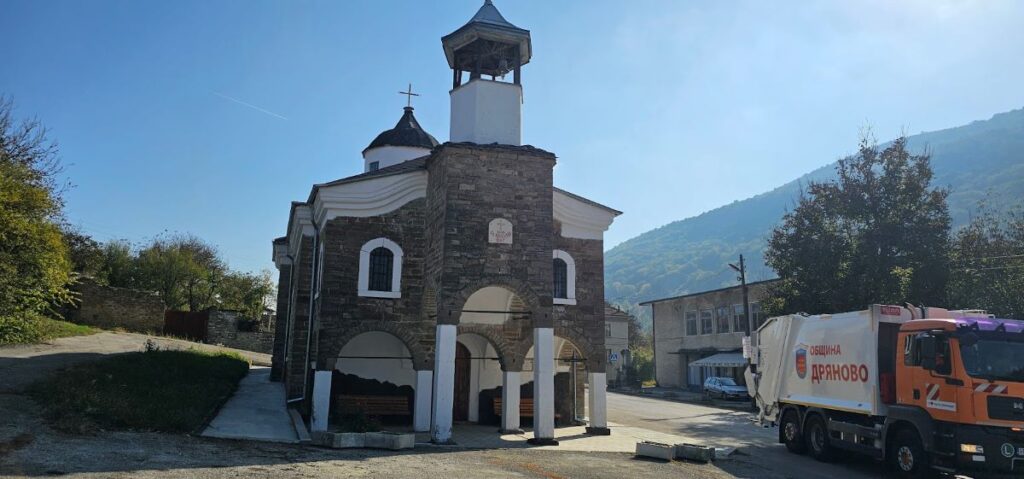
The Yantra is the first one encountered on the road from Sevlievo to Dryanovo. It impresses from a distance with its recently renovated church, which has a hard time coexisting with the buildings around it.
Yantra is a multicultural village. “We have English, Germans, Poles, one Ukrainian, one Arab woman from Syria, one Israeli, and one Filipina,” shares Mariyana Stoycheva.
I meet her in the village shop, which also functions as the local tavern and café. This is the place where everyone in the village comes when they want to chat with someone. The owner is quite talkative.
In the village of Yantra is her father’s hundred-year-old house, which she and her husband renovated twenty years ago. She was forced to return after she was laid off from her job in Gabrovo and couldn’t find a new one. She moved back to the village and has been there ever since.
“We made the house with all the conveniences; nothing is missing,” shares the woman, who increasingly goes to Dryanovo or Gabrovo less often because “I don’t feel like going to the city anymore.”
She and her husband bought a space in the center of the village, creating a shop and a café, where Mariyana continues to work, even though she is retired.
The village looks empty. The only living creature in the square is a dog lazily stretched out in the autumn sun. When it sees outsiders approaching, it comes over, wagging its tail, as if checking to see if everything is alright.