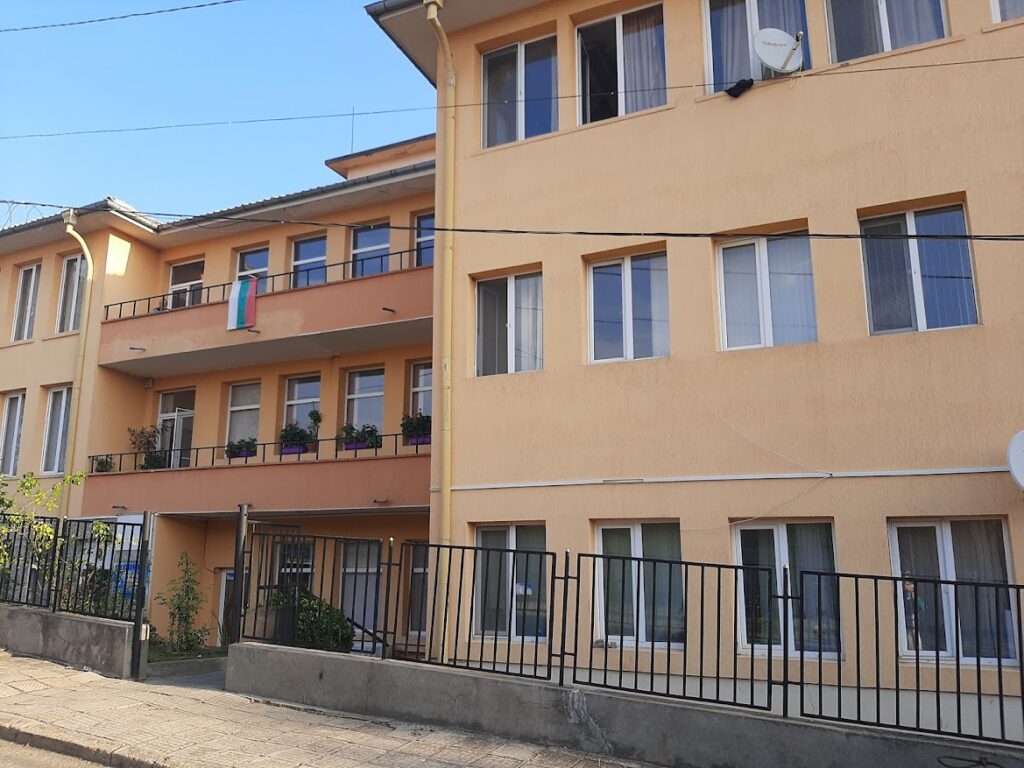
On September 30, 2021, an outbreak of Covid-19 ignited at the retirement home in Dobromirka village, Svilengrad municipality. Out of 44 tested elderly residents, 21 returned positive results, and subsequently, six of them passed away. Among the 22 staff members tested, only one tested positive.
Four of the residents were immediately admitted to the nearest hospital—the multi-profile hospital for active treatment in Sevlievo. Among them, three could not fight off the disease. Additionally, three others who remained to receive care in the home also died. The facility was placed under quarantine, and one nurse, unable to cope, left her position.
The account of what happened in the retirement home in Dobromirka may initially seem like dry statistics. However, it raises serious questions about the nature of the relationships involved and serves as a basis for allegations of neglect in operations, as well as implications that the municipality of Sevlievo, as the principal authority of the home, is protecting its director.
After the Covid-19 Outbreak
On September 30, as soon as it became clear that the retirement home in the Sevlievo village was an outbreak site, the Regional Health Inspectorate (RHI) in Gabrovo isolated the infected individuals and ordered that a ten-day monitoring period be established. Additionally, if typical Covid-19 symptoms appeared, the personal physician was to be notified immediately, and information was to be reported to the inspectorate.
Two weeks later, the home in Dobromirka made headlines, and only two days after that, the Municipal Crisis Headquarters in Sevlievo broke their silence, announcing that the infection had spread within the municipal social facility.
On October 25, the RHI conducted another inspection in Dobromirka. This time, 32 elderly residents and 14 staff members were tested, all of whom returned negative PCR results. The inspection concluded that the anti-epidemic measures were being followed, and the staff present at the time of the inspection had completed their vaccination course with two doses, as indicated in the inspection report provided by the RHI to “For the truth” (“Za Istitata.”)
It appears that the situation has been brought under control, albeit at the cost of six lives. However, accusations against the home’s director, Galina Racheva, soon begin to flood in—alleging incompetence, negligence, and an inability to manage the facility. These claims come from former employees whom “Za Istitata” interviewed. According to them, the situation spiraled out of control because the municipality of Sevlievo tolerated Racheva and failed to oversee the operations of the home. She denies all accusations, stating that she earned her position through a competitive process.
Transformation of Qualifications
In fact, the qualifications of the director are the first aspect that “For the truth” (“Za Istitata” )encounters when tracing the competitions announced by the Municipality of Sevlievo for the position of “Director of the Retirement Home in Dobromirka.”
Three competitions were announced for the director of the home in question in 2015. The announcement for the first was published on the municipality’s website on June 3, 2015. According to this announcement, candidates for the position were required to have graduated from one of the following fields: “Social Activities,” “Social Pedagogy,” “Psychology,” “Economics,” “Medicine,” “Health Management,” or another related field.
On July 10, a protocol from the candidate assessment committee was published again on the Sevlievo Municipality’s website. It became clear from this protocol that there were two candidates—Milena Petkova and Galina Racheva. Racheva was not allowed to interview “due to a mismatch of the completed educational and qualification degree with the required one,” meaning that according to this protocol, Galina Racheva lacked the qualifications to manage the social institution. Nevertheless, only half a year later, she was approved for the director position.
On November 18, 2015, the Municipality of Sevlievo announced a second competition for the director of the home in Dobromirka. This time, the requirements for candidates were changed, and they were required to hold a diploma in one of the following areas: “Social, Economic, or Legal Sciences,” or “Healthcare,” along with a minimum of three years of experience. Unlike the previous protocol, the protocol from this competition is not public, prompting “For the truth” (“Za Istitata”) to request a copy from the Municipality of Sevlievo. However, the responsible Deputy Mayor, Krasimira Yordanova, explained that according to the Labor Code, the results of the competitions are communicated to the candidates within three days and that the municipality is not obligated to publish the protocols, which also contain personal data. This, however, does not answer the question of why the first protocol is public while the second is not, especially since there are numerous protocols from various competitions published on the municipality’s website at the time this text is being released.
Thus, we arrive at December 30, 2015, when a third competition for the director of the retirement home in Dobromirka was announced. This time, candidates were required to have graduated in “Pedagogical Sciences.” An additional detail is that this protocol is also not public, and “Za Istitata” (“For the truth”) was also denied a copy of it.
The requirement for a retirement home director to be appointed from the field of pedagogy aligns with the accusations from former employees that Racheva has the municipality’s protection. This is because she graduated in “Bulgarian Philology” with a bachelor’s degree, and on her employment record, there are no documents proving additional qualifications in the field of social services.
“For the truth” (“Za Istitata”) learns this from another protocol provided by the Agency for Social Assistance (ASA) concerning inquiries about inspections carried out by the ASA at the home in Dobromirka. This protocol is from 2018, meaning the situation was relevant at the time of Galina Racheva’s appointment.
This raises the question of how Galina Racheva was not allowed to interview in March due to lacking qualifications, yet six months later, the conditions of the competition were changed to seemingly favor her. Due to the municipality’s refusal to provide the protocol from this competition, we cannot determine whether Racheva had any competition or what factors influenced her selection, further fueling suspicions that the competition was tailored for a specific candidate.
Who is the Boss?
Another detail stirs suspicions that the Municipality of Sevlievo is concealing information. After conversations with departing employees who stated that working with the management of the establishment was challenging, leading to mass departures, “For the truth” (“Za Istitata”) inquired about the number of employees who left or were released during the period from 2016 to 2021. The municipality refused to respond, explaining that the question falls “under the competence of the employer, which in this case is the director of the social service.” In response to the same inquiry sent to the Agency for Social Assistance (ASA), they stated that “this information is entirely within the competencies of the social service provider, in this case—the mayor of the Municipality of Sevlievo.”
These completely contradictory statements leave unanswered the question of who actually runs the retirement home in Dobromirka—the director or the mayor of Sevlievo. Because if this question is transferred to the situation surrounding the outbreak of Covid-19, then who was supposed to exercise control over the compliance with the measures against the spread of the infection? According to the Municipality of Sevlievo, the entire responsibility lies with the director, while the Agency for Social Assistance attributes it to the mayor. Although logic suggests that the direct responsibility indeed rests with the director, who has been authorized by the mayor to manage the social institution, the mayor remains indirectly responsible as the owner.
Irresponsibly Protected
Director Galina Racheva offers an explanation for how the infection spread within the retirement home. She recounts that on the Sunday prior to the mass testing (three days before the first symptoms appeared), a duty nurse felt unwell but completed her shift, stating she would see a doctor the following Monday. On that Monday, she called to say that she had been hospitalized in the Internal Medicine Department of the hospital in Sevlievo with bronchopneumonia. She mentioned nothing about having Covid-19, but Racheva became suspicious and personally called the department. It turned out that the nurse was not in the Internal Medicine Department but in the Covid sector of the Neurology Department, having tested positive for Covid-19, which led to her pneumonia.
Four days later, twenty-two of the elderly residents tested positive for the infection, and as it became evident, six of them were no longer alive.
Galina Racheva is adamant that the first thing she will do when the staff member returns to work is to dismiss her due to her criminal and irresponsible behavior, “even if this is the last decision I will make as a director.”
However, not everyone shares Racheva’s perspective. One nurse, who wished to remain anonymous, stated that there has essentially been no effective access control in the home since the beginning of the pandemic, allowing anyone to enter freely. She noted that the residents were not sufficiently protected, and most of the staff traveled, which was also a prerequisite for the transmission of the infection.
Galina Racheva’s suspicions regarding how exactly the virus entered the retirement home unleash a wave of accusations against her. Her subordinates begin to speak out about how the rules were being ignored within the home, while the Municipality of Sevlievo turns a blind eye.
The Home Will Be Closed
The former paramedic of the establishment, Danail Zlatev, reached out to “For the truth” (“Za Istitata”) himself. Some time ago, he and one of the departing nurses went to the Municipality of Sevlievo to report weaknesses in the social home. They hoped to prompt an inspection so that the irregularities could be addressed, but that did not happen.
“I don’t trust the institutions. I promised myself I wouldn’t say anything more, as nothing will change; I’ll just be tormented,” says the anonymous nurse as we encourage her that if something is wrong, it is better to bring it to light; otherwise, how can we expect the situation to improve? “Last year, I filed a complaint with the municipality detailing how things were being handled in the home. They listened to us, but that was it. Everything is being covered up, which is why I don’t want to talk anymore,” says the woman, who has three years of experience at the establishment and left after the outbreak of Covid-19.
During the brief time we talk, we learn that there is no night nurse at the home; instead, there is just a duty caretaker at night. On one such night in the past, three individuals died.
The likely lack of nighttime staff could be a factor in the theft that occurred in September 2019, when a metal safe containing 27,000 BGN, personal funds of the residents, was found empty in the yard of the home, and the thief has yet to be identified, with the pre-trial proceedings in the case being closed.
The nurse also mentions that food was misused. At the director’s orders, leftover bread was dried out and used to make a broth for the residents. A doctor was only called in extreme cases, with the decision of when to do this made by the director. In critical situations, again at the director’s orders, the elderly were taken to the village paramedic.
To what extent the nurse’s account aligns with the truth, “For the truth” (“Za Istitata”) asks one of the departing cooks, who also refuses to speak. She explains that she wants to forget what happened to her while working at the home. “I’ve left; it’s all in the past,” says the woman, and before hanging up, she adds, “A normal person cannot work there.”
Paramedic Zlatev is much more talkative. He recounts that he left a year ago after suffering an accident that left him incapacitated for a long time, leading to an extended medical leave. During that time, the director asked him to resign, and he submitted his resignation request. Today, he shares that he left “because it was intolerable there.”
According to him, the people living in the home have no rights, “neither to go outside nor to light a cigarette.” Regarding their treatment, it was denied for various reasons, except in extreme cases. “A teacher distributing medication, equipping an emergency cabinet, and instructing nurses on what to do—where does that happen?” asks the former paramedic, who believes that the director is under a protective umbrella. Whether out of bitterness or from everything he witnessed while working at the home, he is quite extreme in his assessment: “Mark my words, the home will be closed by New Year,” he states.
Everyone whom “For the truth” (“Za Istitata”) spoke with says that staff does not stay in the home in Dobromirka. The Municipality of Sevlievo provides an explanation for this. In responses to inquiries sent to “For the truth” (“Za Istitata,”) they state that turnover “is not only a problem for the home in Dobromirka, but in the social sector as a whole,” explaining the staff shortages with “objective and subjective factors such as the location of the establishment, the low remuneration of specialized personnel compared to other fields, a shortage of working-age medical personnel, and a lack of motivation and unwillingness for change in carrying out activities aimed at improving care for social service users in accordance with regulatory requirements.”
Agency for the Quality of Social Services
When “Za Istitata” inquired about the authority in Bulgaria empowered to oversee social establishments, the Agency for Social Assistance (ASA) revealed that until July 1, 2020, the Inspectorate under the Agency carried out the oversight regarding the lawful implementation of legislation in the field of social services. After this date, however, the Social Services Act came into force, establishing the new Agency for the Quality of Social Services, which was tasked with all activities relating to quality control within institutions providing social services.
Until then, oversight was conducted by the ASA, which, since 2016—when it effectively became part of the new director’s responsibilities—completed two inspections at the home in Dobromirka: one in 2016 and another in 2018. The protocol from the first inspection cannot be provided, as such protocols are kept for five years; therefore, it was unavailable at the time it was requested, according to the ASA. “Za Istitata” received the protocol from the inspection conducted in January 2018 in full, with personal data redacted.
From that protocol, certain circumstances emerge that raise doubts about whether, at that time, the criteria and standards for providing quality social services were met in the retirement home in Dobromirka.
During this inspection, the sanitary and hygienic condition of the establishment was deemed satisfactory, while hygiene was noted to be substandard. Here is what exactly was written: “In most of the bedrooms, sanitary facilities, and corridors, a strong smell of urine was noticeable. The tiles and toilet bowls in the sanitary facilities and the sinks in the residents’ rooms were unclean and worn. The terraces leading to the bedrooms had not been cleaned for a prolonged period.
The commission found that in many of the residents’ rooms, on the three floors, in the communal block, and sanitary facilities, there was mold; parts of the walls were peeling and crumbling. While the window frames had been replaced, there were no screens on the windows, and the windows had not been cleaned for a long time.
The flooring in the rooms varied—some areas had linoleum, laminate, and tiles. In areas with linoleum, it was torn and dirty.
There was no running water in the sleeping quarters, and in one room, the sink was clogged, while in another, it was broken and unusable. There was also no running water in the dining room and cafeterias on the second and third floors.”
It is important to clarify that by the end of 2019, the kitchen block of the establishment was completely renovated and equipped with new appliances. This was made possible by a grant of 7,000 euros from the Association of Women in Europe.
Returning to the inspection from 2018, which is actually the only one conducted in the social institution in the past four years, ASA explained in a letter to “Za Istitata” that due to the pandemic, they were unable to carry out inspections.
From the sanitary journal, the inspectors established that nearly a year prior, an inspection by the RHI Gabrovo had concluded with a directive to eliminate the mold, which, as per the protocol, had not been addressed.
Irregularities Arise
The home does not have a registry for received donations. In 2017, a commission was appointed by the director of the social establishment to accept donations, but the order was issued in violation of the Administrative Procedure Code, as it did not specify a legal basis, the inspectors concluded. They also found that in September 2017, a donation was received at the home, but the composition of the commission that accepted it did not match that previously established by the director’s order the year before. The director explained that on the day the donation was received, the designated staff members were not on duty due to scheduling, and another employee was on extended medical leave. Additionally, the donation agreements had not been signed by the donors, according to the protocol.
Regarding food products, the commission discovered discrepancies between the prices specified in the contracts and the actual prices recorded on the delivery receipts. For instance, margarine in a half-kilogram package was supposed to be delivered at a price of 2.35 BGN, but it was delivered at 5.00 BGN and 5.40 BGN. Hake fish was meant to be supplied at a price of 5.29 BGN, but it was delivered at one leva more. In October 2017, semi-durable sausages were supposed to be delivered at a price of 4.33 BGN but were stored at a price of 5.49 BGN. Due to these discrepancies, the commission requested a written report from the cashier-hostess, but such a report was not received by the end of the inspection.
A problem is also emerging with the medical care of the elderly residents. According to a nurse, all users had a personal physician who did not have designated hours for visits and only came when called. Medical care was likely being neglected, as the commission found that the health insurance cards of the users listed the names of their treating physicians from their hometowns.
The residents in the home did not have medical files or outpatient sheets documenting medical examinations from their general practitioners or specialists when necessary. For three residents, discharge summaries were found in the emergency cabinet. The healthcare plans for the residents were uniform and varied only in their medical histories.
Whether the findings of the ASA in January 2018 remained
the same in the following years is a matter of speculation. We cannot know if anything changed after this inspection since, as noted, it was the last one in the past four years. The Municipality of Sevlievo claims that it conducts regular annual inspections “as well as ongoing inspections related to providing methodological assistance in delivering social services,” and that “recommendations have been made regarding the documentation maintained by the staff and improving the material conditions.” They also explain that over the years, ongoing repairs have been carried out, and the furnishings in the residents’ rooms, common areas, kitchen block, sanitary facilities, and dining rooms have been replaced. The same is stated by director Galina Racheva, who insists that the living conditions in the establishment are good. Yet, under quarantine conditions, this cannot be verified.
From all that has been presented thus far, there is no doubt that the state, at least on paper, is very concerned about the quality of social services. Otherwise, why would Boyko Borisov’s third government create a special agency to monitor this in 2020? This agency has 79 staff members and a budget of 3 million BGN, with expenses outlined by areas and policies and approved by the then social minister Denitsa Sacheva. In fact, the agency’s budget allocates funds for only one budgetary program—”Support for Children and Families.” The entire budget of the agency for 2021 is dedicated to the implementation of this program, including 2.7 million BGN for personnel costs and 300,000 BGN for operating expenses.