- The MP can donate only from his dividend, but not from funds of his own company
- This can be seen as an interference in the management of the company and even as an attempt for its decapitalization
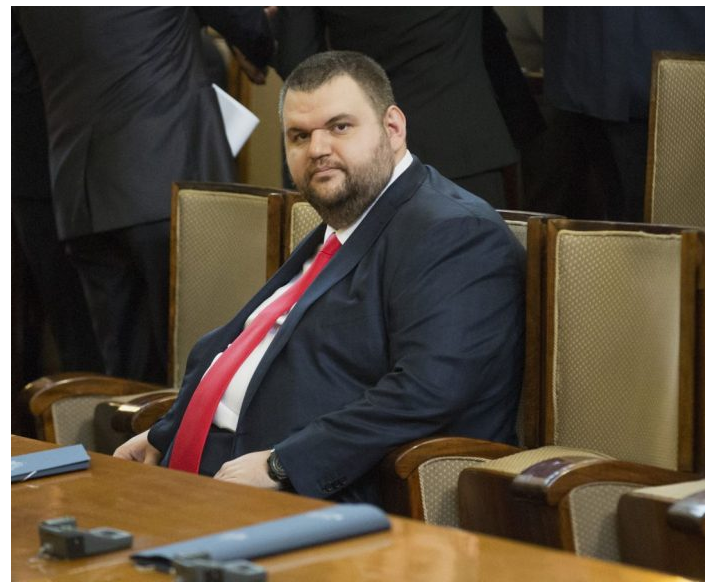
Photo: RFE/Free Europe
Yet in the first days after the state of emergency was imposed in the country, Delyan Peevski – MP from MRF (Movement for rights and freedoms) launched a loudly advertised donation campaign. In it, he was presented as a generous philanthropist, who has donated already (according to media publications) nearly BGN 5 million to hospitals in Bulgaria. But only a few media and journalists have publicly asked the question, what is the origin of the money for these donations and whether they are made according to all the requirements of the law.
To this
Peevski’s media and publications reacted hysterically.
On April 15 this year “Pro Veritas” published an investigation on the 1000 rapid corona virus tests donated by Peeevski and intended for the residents of the quarantined village of Panicherevo.
How the media and publications controlled by Peevski reacted to the investigation – here.
Interview of Venelina Popova for “Deutsche Welle” – here.
It turned out that the donation was made by a company and not by the physical person Delyan Peevski, and was handed over to the mayor of Gurkovo Marian Tsonev (elected as a candidate of the MRF) through the mediation of the Stara Zagora party MP Halil Letifov.
In response to questions from “Pro Veritas”, the mayor twice flatly refused to name the company that made the donation. The reason for his refusal was that there was no permission from Peevski himself. Moreover, Tsonev said he had been in talks with the Stara Zagora Regional Health Inspectorate and with the Kazanlak Hospital to provide teams to work with his tests. Stanimir Stankov – director of the Inspectorate and Katy Manolova – manager of the Kazanlak Hospital categorically denied these allegations. This case gave rise to the continuation of the investigation into the donation campaign of Delyan Peevski, a campaign led by special headquarters. In addition to Halil Letifov, this headquarters includes the mayor of Belitsa municipality Radoslav Revanski.
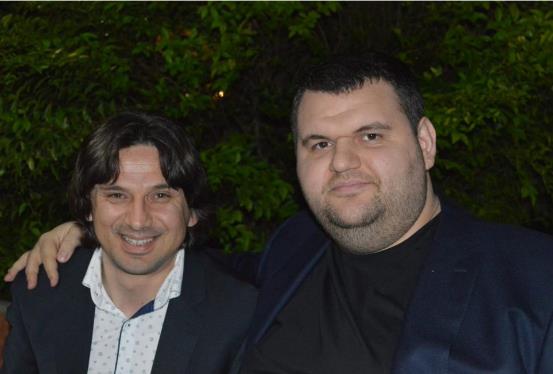
Photo: Kazanlak.com
Traces of the donations reached “Intrust” EAD –
a Joint Stock Company, with sole owner Delyan Peevski. The company has donated BGN 5,000; 20 protective helmets and 20 protective clothing to the hospital in Silistra. A reference in the Commercial Register has indicated that at the end of 2018 this company was joined by “NSN Investment” EOOD, “Developments” EAD and “Prestrafic” EOOD, and at the beginning of 2019 – by “ZAIR 2009” EOOD. All four companies are the sole property of “Intrust” EAD. Its executive director is 79-year-old lawyer Alexander Kirilov Georgiev. In 2009, he was announced by the Dossier Commission as an agent of the former Committee for State Security, working under the pseudonym “Plamen”. He is also a manager of the other companies of Peevski, including “Telegraf Media” EOOD, also owned by “Intrust” EAD.
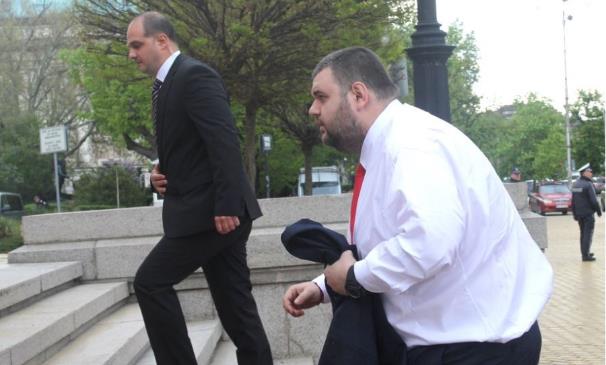
Photo: RFE/Free Europe
Among the hospitals that received a donation on behalf of the MRF MP is the one in Kazanlak. The donation was delivered on a day-off, in the absence of the manager Dr. Katy Manolova and was received by a doctor on duty, but without the mandatory accounting documents, which were still missing in the hospital at the time of the inspection carried out by “Pro Veritas”.
The Pazardzhik Hospital and the Alexandrovska Hospital in Sofia refused information about the company-sponsor with the arguments that they would only answer questions in writing.
After they were sent to them, on April 27 this year, in an email from Alexandrovska Hospital they announced that “the requested information does not fall within the scope of the Law on Access to Public Information, and
the content of the donation contract is confidential
and should not be disclosed to third parties”.
In the same way they reacted from the hospital “Prof. Stoyan Kirkovich ”in Stara Zagora. According to the legal expert of the health institution, only two companies – “Coca-Cola” and “Zagorka” have requested letters of thanks for their donations. In the contracts with the other companies there was a special clause that the information about them should not be disclosed to third parties. Such a condition sounds strange, given that the media controlled by Delyan Peevski list in detail all the material and monetary donations that the MP claims he has made so far.
After the increased media and public attention to Peevski’s daily donations, his headquarters changed its tactics and announced that the last donation of BGN 300,000 in favor of the Bulgarian Red Cross was made namely by the MP’s sole proprietorship – “Intrust” EAD.
Does it matter whether the MRF MP donates as a physical person or through his joint stock company?
To make the difference easy to understand, let’s recall the way Bill and Melinda Gates donated $ 4.6 billion – 5 percent of their fortune to deal with the coronavirus pandemic. Before doing so, they transferred their shares to a Donation Fund they had previously established.
Assuming that Peevski’s donations are corporate, by law they are a commercial transaction in which ownership of a property of significant value is transferred. For this, the relevant mandatory accounting documents must be prepared. Sponsors that are legal entities and are listed in the Commercial Register, identify themselves by the so-called unified identification code (UIC). Those who are not listed in the Register must submit more information about the name, address and subject of their activity, as well as about the management bodies and the representation of the company. If the donation transaction is made through a proxy, those in whose favor the donation is made are obliged to identify the proxy and to request evidence of his representative authority.
According to the Law on Obligations and Contracts, the donation of movable property (including money) must be made in writing with notarized signatures or by handover. However, even upon handover, the recipient of the donation must be able to identify the sponsor and the donated property. This is mandatory because of
the requirements of the Law on measures against money laundering,
the Accounting Act and other special laws that guarantee accurate and true accounting and transparency of the activities of state medical institutions. Donated equipment requires technical and other data, which are entered and reflected in the accounts as part of the property of the recipient of the donation.
According to the legal expert Lora Georgieva from the “Anti-Corruption Fund” Foundation, with whom “Pro Veritas” has spoken, in their capacity of legal entities obliged under the Law on measures against money laundering (“LMML), the hospitals have a number of obligations that they could not fulfill without accurately identifying the sponsor.
Donation transactions worth more than EUR 15 thousand or their BGN equivalent, as well as donations of cash amounts over EUR 5 thousand are subject to mandatory identification at least by collecting personal data of the individuals – actual owners of the legal entity (holding more than 25% of its property), as well as of their representatives, when the donation is made through proxy, as in this specific case. Furthermore, with regard to sponsors and actual owners of sponsors-legal entities that are prominent political figures, including MPs, actions are applied to establish the origin of funds and to clarify the source of property, as well as measures for comprehensive verification.
Such measures shall also apply
in any case of suspected money laundering
or the availability of funds of criminal origin, regardless of the value of the transaction. Such doubts could arise when the subject of the donation does not correspond to the object of the sponsor’s activity, or when a donation is made that is not in accordance with the needs of the one in whose favor it was made.
“Suspicious could also be sponsors who have made a series of donations in a short period of time, as well as those whose representatives or proxies present documents for identity and representation, whose authenticity raises doubts,” specifies Georgieva. Doubts are also raised by sponsors or their representatives who have failed to submit identification documents – their own identification and of the donation. Anonymous donations, as well as those made under conditions, could also raise doubts because of the difficult verification of their legality.
According to Georgieva, the issue of sponsor identification also has tax grounds. “Every donation should be accounted for by both the gifted and the sponsor,” she explains. “It is important to note that not all donations are recognized for tax purposes, but only those that are exhaustively specified in the law, including those made in favor of health and medical institutions”.
According to the current legislation, the recognition of the amount of the donation for tax purposes is only up to the amount specified in the law, and only if the donation does not directly or indirectly benefit those who grant it or those who dispose of it. For this reason, it is extremely important to be clear who the sponsor is, what the total and the unit value of the donation are, who received it, what it is used for and whether it was actually received.

Photo: RFE/Free Europe
In the context of these legal provisions,
many questions arise about the donations made on behalf of “Intrust” EAD
with sole owner Delyan Peevski.
An important clarification in this case is that the responsibility for all donation operations lies with the executive director and the legal representative of the Joint Stock Company Alexander Georgiev, respectively the Board of Directors of the company, and not the owner of the capital, i.e. the MRF MP. This practically means that in his personal capacity Peevski can donate only his dividends, but not financial resources of his own company, because this can be seen as an interference in the management of the company and as an attempt to decapitalize it. All this should be decided by the competent authorities and auditors after verification of all donations made by “Intrust” EAD.
To highlight the donation campaign of Delyan Peevski,
the citizens must receive answers to the following questions:
1. Did Peevski donate personal funds or the donations, legitimized as his own, belong to the company? And if they are property of the company, why were the citizens deceived for more than a month that the MP is the biggest sponsor in the country?
2. What is the connection between MPs from MRF, the mayor of Belitsa municipality and “Intrust” EAD and if they were bearers of the donations, do they have notarized powers of attorney from the executive director of the company Alexander Georgiev? Also, did they receive benefits for carrying out activities uncharacteristic of their public positions?
3. Where the donations should be delivered – to the logistics headquarters of the Ministry of Health, as announced by General Ventsislav Mutafchiiski during one of the morning briefings of the National Operational Headquarters, and from there to be distributed according to the will of the sponsors to the respective medical institutions, or each sponsor provides them personally to the respective health institution, that is also a commercial company?
4. Will the NRA (National Revenue Agency), SANS (State Agency for National Security) and other institutions responsible for the specific case inspect all documentation accompanying the donations, legitimized on behalf of Delyan Peevski and will they answer whether there are gaps in the documents that would make the donations invalid?
5. It is also important whether among the donations made there are doubtful in the sense of the Bulgarian legislation and in particular of the Law on Measures against Money Laundering. The reasons for such an inspection are that the donations of “Intrust” EAD do not correspond to the activity of the joint-stock company, and moreover, many donations have been made within a very short period of time.
A third ground for verification is the fact that some of the donations were made conditionally. We mean money transfers to the Military Medical Academy, “Pirogov” and Alexandrovska Hospital.
Thus, for example, the Military Medical Academy has received BGN 200,000; “Pirogov” – BGN 101,000 for targeted payment of salaries to a specified number of nurses and orderlies, and Alexandrovska Hospital – BGN 220,000 with a condition, BGN 70,000 of which to be for financial support of the first line medics.
All these questions should clarify whether “Intrust” EAD is a risky sponsor or not, and whether money has not been laundered through its transactions with medical institutions in the country? Also, whether Delyan Peevski has ordered the donations to be effected with funds from a public joint stock company.
If the institutions that are obliged to make these inspections do not do so, this will only confirm the suspicions that the umbrella by the prosecutor’s office and by the executive power in the country is widely spread over Delyan Peevski.
“Pro Veritas” thanks for the expert assistance of Lora Georgieva from the legal team of the ”Anti-corruption Fund” Foundation and of Dipl. Eng. Menderes Kungyun – human rights activist and representative of the non-governmental sector in Bulgaria.
Illustrations from Radio Free Europe are used in the text. They are republished with the consent of Radio Free Europe/Radio Liberty, 1201 Connecticut Ave NW, Ste 400, Washington DC 20036.