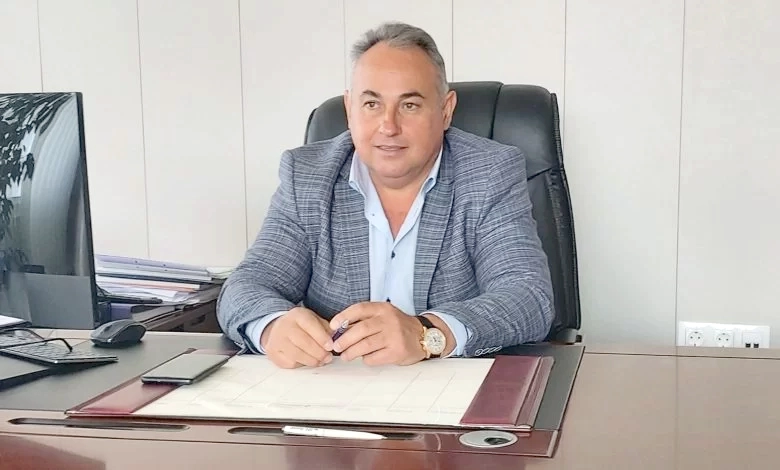
On May 12, Mayor Elin Radev (GERB) published a draft plan for the financial recovery of Dospat Municipality for the next three years. The public discussion is scheduled for June 12. At first glance, the document appears disciplined, with tables, annual projections, and specific figures. However, the very first line reveals the core issue: the municipality acknowledges overdue liabilities totaling exactly 6,022,417 BGN and immediately proposes a “cure”—an interest-free loan from the state of the same amount, to be utilized as early as the third quarter of 2025. The question of “When and how will we repay it?” remains for later.
The plan contains no fallback scenario. If the Ministry of Finance (MoF) refuses or simply grants a smaller amount, the entire model collapses. The text itself does not hide this condition but presents it as an inevitability, rather than a risk. Thus, right from the start, the recovery effort becomes hostage to a political decision by Finance Minister Temenuzhka Petkova.
The revenue pump – optimism on paper
Next comes the “main revenue pipeline.” The broadest segment is the “Municipal Waste Tax,” which is projected to increase from 310,000 BGN to 569,315 BGN this year—a rise of 79%. The plans assume an unchanged collection rate of 86-90%, with expectations to collect over 1.2 million BGN by 2028. But how these funds will be used to repay the loan remains unclear, especially given the legal prohibition that revenue from the waste tax can only be used for sanitation purposes, and there is no explanation of how these amounts will cover the debt.
We are faced with paradoxes even further. In the explanatory note, Mayor Radev claims that “no measures have been taken so far to increase local taxes,” yet the table calculations, located two pages later, show otherwise. The scheme of rising own revenues by year displays a detailed breakdown of how all taxes—ranging from property to tourism—are projected to grow by over 430,000 BGN. Specifically, there is an increase of 140,000 BGN in vehicle tax, 180,000 BGN from property acquisition taxes, 80,000 BGN from property tax, and 34,000 BGN from tourism tax.
It leaves the impression that someone drafted one report in an office and was filling out an Excel sheet on another.
Micro-level savings
On the other side—the expenditure side—a modest collection of “cost-saving” measures is presented. The most promoted is the installation of a photovoltaic system on the municipal administration building and the kindergarten in the village of Brŭshen. An honest admission is made: without batteries, it will actually operate at only 60% capacity, meaning the annual savings will be just 15,010 BGN.
Next are LED streetlights, which, according to the plan itself, lead “more to a social than a financial effect” because they reduce the electricity bill by only about 10%.
The optimization of the municipal sanitation enterprise turns out to be a reduction of… unfilled positions, saving a maximum of 60,000 BGN annually.
When all these savings are summed up, they amount to 430,000 BGN over the entire period—less than 7% of the debt repayment amount.
In the final table, savings and new revenues are mixed with Excel acrobatics in one column, resulting in an impressive forecasted “effect” of 5,285,188 BGN. But even this combined figure is insufficient to service the interest-free loan; a gap of 737,229 BGN remains, which the authors generously propose to offset with future state transfers in 2028—after the plan ends.
How did the chronic deficit develop?
Critics of Radev argue that the financial hole was dug by his own management. In June 2024, local and national media covered a series of protests against the mayor, who sent excavators and police to demolish properties of residents daring to speak out against corruption or to run against him. Several months earlier, Mayor Elin Radev launched a project worth 5.6 million BGN—“Kraybrezhna” (Coastal) street, which opposition parties claim mainly serves guesthouses owned by the Radev family. The funds for the street were borrowed, and liabilities to suppliers increased. Despite already being in his third term, Elin Radev sees the debt problem as outside his control.
“After the inauguration of the newly elected local government at the beginning of November 2015, and following the analysis conducted at that time of the financial situation, it was established that the municipality was in a serious financial state,” the mayor writes in his report. In this context, a Financial Recovery Plan was drafted, which envisioned using an interest-free loan from the Ministry of Finance to address the situation… However, such a loan was not granted,” he recalls.
Until recently: “record investments”
Against this backdrop, Engineer Radev continued to speak about the rise of Dospat Municipality. In his annual report to the councilors, the mayor listed “completed and contracted projects worth over 10 million BGN” and provided detailed lists of streets, parking lots, and tourist infrastructure that he claims demonstrate a “tourist boom” around the Dospat Reservoir.
This divided narrative—one side presenting a crisis plan, the other celebrating an “investment boom”—describes a paradox where citizens do not understand why they are being asked to pay higher taxes and fees due to the financial collapse, while at the same time, the city “thrives.”
The recovery document concludes with the assurance that, once the loan is granted, the municipality will keep its liabilities below 15% of annual expenditures, as required by law. However, there is no alternative scenario—neither considering lower collection rates, delayed transfers, nor the new burden of unpaid court rulings already weighing on the budget (280,000 BGN in compensation claims in early 2025).
Today: a “straitjacket” of words
Thus, the recovery program resembles a straitjacket sewn from promises: costly for citizens, effective as a formality, and designed so that nothing substantial in the town’s budget culture or the authoritarian management methods of the municipality will change. The figures are subject to wishful interpretations rather than sober arithmetic.
Whether the Ministry of Finance will approve a recovery plan that foresees Dospat Municipality repaying a loan funded partly by the waste tax—and openly admits it has no intention of returning 737,000 BGN, expecting it to be offset after 2028—remains to be seen. But in any case, without painful reforms and cuts, not only the current but also the next generation will be forced to count not the streets paved with new asphalt but the garnishments on Dospat Municipality’s bank accounts.