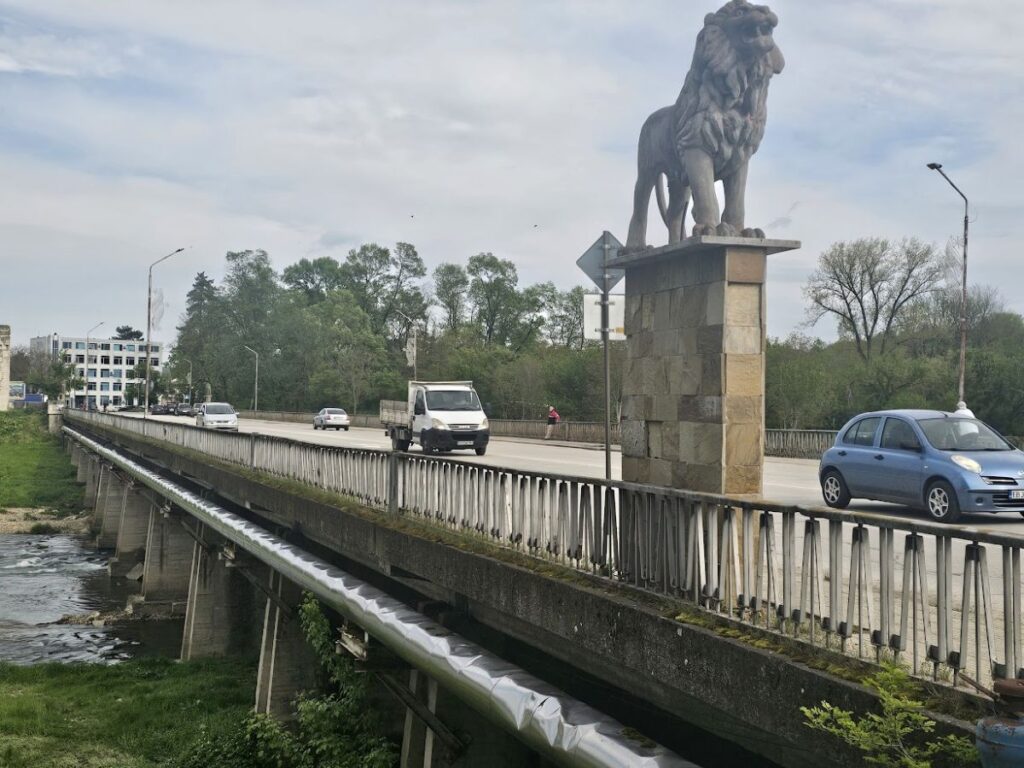
Kolyo Ficheto bridge in Sevlievo no longer classed as “pre-emergency” – but remains among Bulgaria’s most critical bridges
The bridge over the Rositsa river in Sevlievo, built by the renowned Bulgarian master builder Kolyo Ficheto, is no longer officially classed as being in “pre-emergency” condition. It is, however, one of 106 bridges on Bulgaria’s national road network whose condition the Road Infrastructure Agency (API) considers critical.
This emerges from a response sent by API to the non-governmental organisation European Centre for Transport Policies, which provided “Za Istinata” with the full list of bridge structures on the national road network classified as being in critical or poor condition.
The list includes 516 bridges across the country in need of urgent repair.
The information does not say when the bridges will actually be repaired. API says the relevant regional road administrations carry out monthly inspections of bridge structures in order to maintain continuous control over their technical and operational condition. Where necessary, additional or specialised surveys are carried out by the Institute for Roads and Bridges.
The findings are then reported to API.
And that, apparently, is where much of the concern over the deteriorating bridges ends.
Government action comes late
The inclusion of Sevlievo’s bridge on the critical list prompted the local authorities to remember that, a year earlier, the Municipal Council had adopted a declaration calling on the state to “speed up the design and implementation of repair and restoration works on the bridge”.
Even at the time, however, it was clear that such a declaration had little practical weight in a process controlled entirely by central government institutions.
Until 29 April this year, the declaration was barely mentioned. Nor did anyone know what response, if any, had been received from the institutions to which it had been addressed: the Ministry of Regional Development and Public Works, the Ministry of Transport and Communications, the Ministry of Culture, API, the National Institute for Immovable Cultural Heritage and the Gabrovo regional administration.
The country’s new political situation appears to have prompted the chairman of the Sevlievo Municipal Council, Yavor Pamukchiev, to announce before the council’s regular meeting at the end of April that “once the new government has been formed, I will allow myself to send the declaration”.
Whether that means the document has spent a year sitting in his office remains unclear.
But even if that were the case, the result would be the same: the bridge continues to deteriorate, crossing it – both on foot and by car – is becoming increasingly risky, and the repair process launched in 2022 remains largely on paper.
Three years still at the design stage
In September 2022, bids were opened for a public procurement procedure announced by API for the technical design of a major repair of the bridge over the Rositsa river in Sevlievo.
The estimated value of the contract was BGN 76,000 excluding VAT, with 150 calendar days allowed for the surveying and design work.
Four years later, the bridge repair is still at the design stage.
The design is intended to determine the specific construction works required, their cost and the timetable for implementation.
The technical project includes comprehensive rehabilitation of the carriageway, a new waterproofing system and asphalt surface, expansion joints, kerbs, safety barriers and railings.
It also envisages restoring the concrete cover on the road slab, beams and supporting columns using shotcrete, as well as protective coatings on all exposed concrete surfaces.
A drainage collector system is also required, along with measures to improve seismic resilience and provisions for preserving all engineering networks in the area of the bridge, according to the procurement documents.
Institutions in no hurry
Kolyo Ficheto’s bridge consists of three interconnected structures. The master builder created an arch bridge with seven openings.
That section of the structure is protected as immovable cultural heritage under Bulgaria’s Cultural Heritage Act and is listed in the national register of immovable cultural properties.
Over the years, however, the bridge has been extended and widened. Today, only part of the structure remains authentic work by Kolyo Ficheto.
This makes it necessary to establish the exact territorial boundaries of the protected cultural property – in other words, precisely which sections constitute the original work of the master builder.
Those sections are subject to approval procedures involving the Ministry of Culture and the National Institute for Immovable Cultural Heritage, because any restoration work must comply with the Cultural Heritage Act.
API told “Za Istinata” last April that a comprehensive analysis of the planned repair was therefore essential in order to identify the part of the bridge considered to be of architectural and cultural value.
Since then, however, there has been no indication that the process has advanced.
The only tangible step remains the municipal council’s declaration from a year ago – a document that is now apparently waiting to be sent to the relevant ministries once the new government is in place.
The result of this institutional passing of responsibility is deeply ironic: in an effort to protect the bridge because it is a cultural heritage site, the authorities have effectively left it to deteriorate.