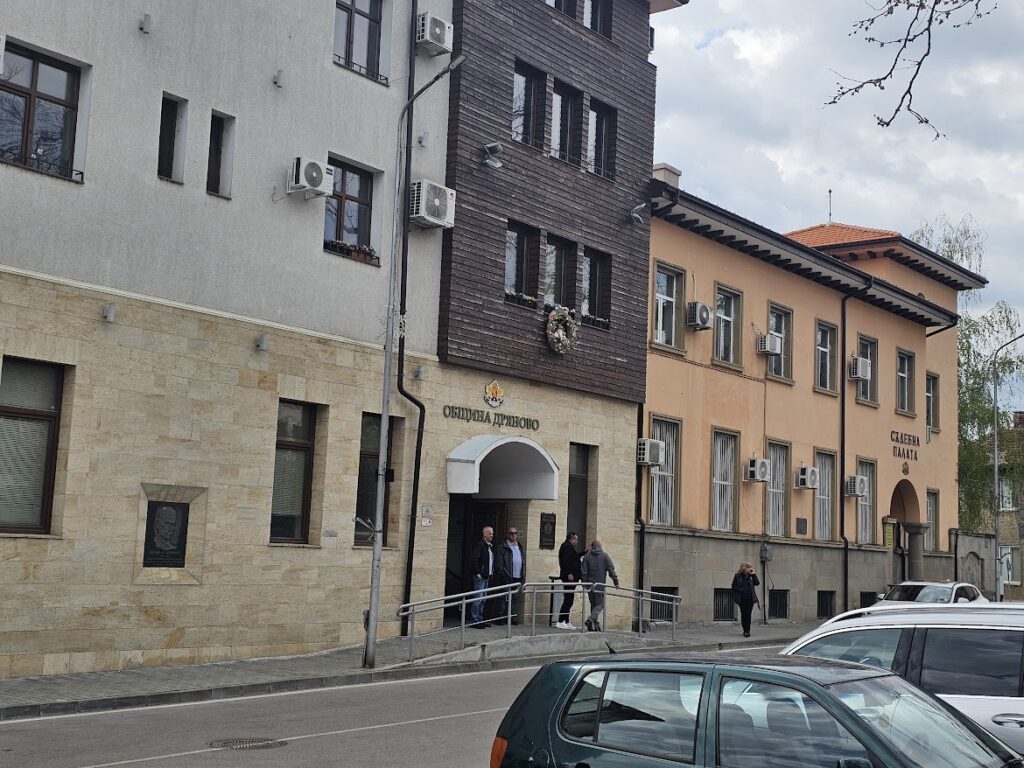
Dryanovo Municipality plans to direct the largest share of its spending in 2026 towards social services, housing, public works and environmental protection, according to the budget estimates, which are due to be publicly discussed on 24 August this year.
The municipality’s planned expenditure for 2026 amounts to €20,013,246. In his report, Mayor Trifon Panchev says spending will be limited to the municipality’s own revenues, transfers from the central government budget and funding under European programmes.
Social care is the largest spending item
The largest share of the budget is allocated to the “Social Security, Assistance and Care” function – just over €5.3 million, or nearly 27% of total expenditure.
Almost €5.2 million is earmarked for state-delegated activities, while around €108,000 is allocated to local activities.
The budget also includes specific funding for supporting individuals and various community activities. The total amount of assistance to be provided by decisions of the Municipal Council and the municipal administration is €110,000.
This does not refer solely to social assistance in the narrow sense. The funds are distributed among different beneficiaries and purposes, including one-off payments following the birth of a child, support for people with reproductive problems, assistance for orphaned school-leavers, funding for the Regional Hospice, medicines for dialysis patients, scholarships for outstanding students, youth activities, integration policies and others.
The largest single amount – €33,600 – is earmarked for people and households affected by the flooding in the municipality in May this year, following a decision by the Dryanovo Municipal Council. Another €20,000 is allocated to the Regional Hospice.
A total of €15,000 is budgeted for one-off payments following the birth of a child, with another €15,000 earmarked for scholarships for outstanding students. A total of €3,000 is allocated to support couples with reproductive problems, with the same amount set aside for dialysis patients.
More than €325,000 will be distributed among community cultural centres, while €44,000 is allocated to sports clubs and the “Athlete of the Year” ceremony. The largest subsidy among the sports clubs is earmarked for football club Lokomotiv 1927 – €14,500.
The second-largest “consumer” is public works and the environment
A total of €4.7 million is allocated to housing, public works and environmental protection, representing around 23% of total expenditure.
However, this should not be interpreted as €4.7 million for specific public works projects, as the figure covers a broad range of activities. A more detailed picture emerges from the capital investment programme, which is publicly available.
Dryanovo’s capital investment programme for 2026 exceeds €7 million and accounts for around 35% of the entire municipal budget. A significant portion of this money is earmarked for infrastructure.
Among the largest projects is €1.7 million for the reconstruction of two municipal roads. Around €683,000 is allocated for a retaining wall on the right bank of the Dryanovska River near the bus station, together with a pedestrian walkway.
The capital programme also includes numerous street repairs in Dryanovo and surrounding villages, including Gostilitsa, Kereka, Tsareva Livada, Dlaghnya, Karaivantsa, Malki Balgareni and Kumani.
These include the major repair of Borova Gora Street for €233,000, the repair of a street in Apriltsi residential district for €139,000, a street in the village of Dlaghnya for €112,000, as well as other street repairs costing more than €100,000.
Investment is not limited to road infrastructure
The municipality has allocated €110,000 for the design of a wastewater treatment plant and a main collector, as well as funding for a composting site – just over €13,000 for the reception area, almost €26,000 for shelters and nearly €9,000 for a working room.
Another €137,000 is earmarked for a vehicle for the collection and transportation of green waste, reflecting Dryanovo’s ambition to compost a large proportion of its biodegradable waste.
Among the more unusual investments are €343,000 for an electricity-generation installation and energy-storage system for social services, as well as €116,000 for two electric vehicles for social services.
A total of €459,000 is allocated for restoring the Via Ferrata and Dryanovska Eco Trail routes, while €107,000 is earmarked for reconstruction of the upper area of the village of Gostilitsa. The programme also includes a traffic-light system costing €62,000.
How much does the municipal administration cost?
The budget estimates allow for a more precise answer because the figures are distributed across several appendices to the budget.
The state-delegated “Municipal Administration” activity includes 49 established positions and a wage fund of just over €790,000.
Another 16 employees are listed under “municipal administration co-financed with own funds”. Their salaries are budgeted at €203,000.
Thus, according to the published estimates, the total number of established positions in the municipal administration is 65, with an annual wage fund of €993,300.
This is the total wage fund and does not, naturally, mean that all employees receive the same salary.
For the state-funded part, the total expenditure for the “Municipal Administration” activity is almost €837,000. Of this, just over €645,000 is allocated to salaries, almost €145,000 to social security contributions and €47,000 to operating costs. Salaries and social security contributions therefore account for around 94.4% of expenditure under this activity.
The picture is different for locally funded activities.
Just over €3.6 million is planned for “Municipal Administration”. At first glance, this appears to be a huge sum, but it does not represent money solely for the salaries and running costs of municipal officials.
More than €2.26 million of the amount consists of capital expenditure. Of this, €1.7 million is earmarked for major repairs to fixed assets, while the remaining capital funds are for the acquisition of tangible and intangible fixed assets and land.
Current expenditure includes €238,000 for other staff remuneration and payments, €41,000 for social security contributions and €988,000 for operating costs. The operating costs include €447,000 for external services, €270,000 for current repairs, €120,000 for materials and €100,000 for water, fuel and energy. The figures are rounded.
It would therefore be inaccurate to present the entire €3.643 million as “administrative expenditure”. The money is recorded under the budget activity “Municipal Administration”, but this category also includes significant investment expenditure.
€168,000 for the Municipal Council
The “General Public Services” function also includes €169,000 for the Municipal Council. Of this, €127,000 is allocated to remuneration, €23,000 to social security contributions, while the remaining funds are listed as “operating costs and membership fees”.
Education is allocated €2.7 million, culture and sport €1.6 million, and healthcare €575,000.
The public discussion of the framework for the municipality’s spending this year is scheduled for 24 August, after which the budget will be submitted to the local Municipal Council for debate and approval.
Holding the public consultation and adopting the budget in August is unusual for municipalities, as a significant part of the year has already passed and some of the funds that are yet to be formally approved may in practice already have been spent.
The reason is the political instability in the country and the snap parliamentary election held in April this year, which meant that institutions began 2026 under an extended-budget arrangement.