



Just over a month after resuming operations, the obstetrics and gynaecology department at Dr Stoicho Hristov Hospital in Sevlievo has closed again – this time indefinitely.
The information was confirmed by the Regional Health Insurance Fund in Gabrovo, which said it had received notification that the department’s activities were being suspended as of 13 March 2026. The stated reason was illness among doctors, with no date given for the resumption of services.
Formally, the “indefinite” closure may be temporary – the deadline for submitting a new notification had not yet expired as of 1 April. In practice, however, women in Sevlievo who depend on the maternity unit are once again left without one.
The second closure in less than four months
The first closure took place on 1 December 2025. Services were symbolically restored on Babinden, the traditional Bulgarian day celebrating midwives, when the hospital introduced its new head of department, Dr Jacqueline Apiosyan from Plovdiv.
Posts on social media sought to present the reopening as a new beginning, with a new team and prospects for long-term stability. A photograph of a newborn baby appeared as a sign that the department was functioning again.
At the time, the hospital also said it expected additional doctors to join the team, including doctors training as specialists from abroad. By the end of February, hospital manager Dr Plamen Tsekоv said, some of them had obtained work visas.
That clarification had come amid concerns that the department, which had been closed after being left with only one doctor, was reopening with just one doctor again.
It turned out there were two doctors, but both were on sick leave as of 13 March, making it impossible for the department to operate.
“There are no problems, we are taking action”
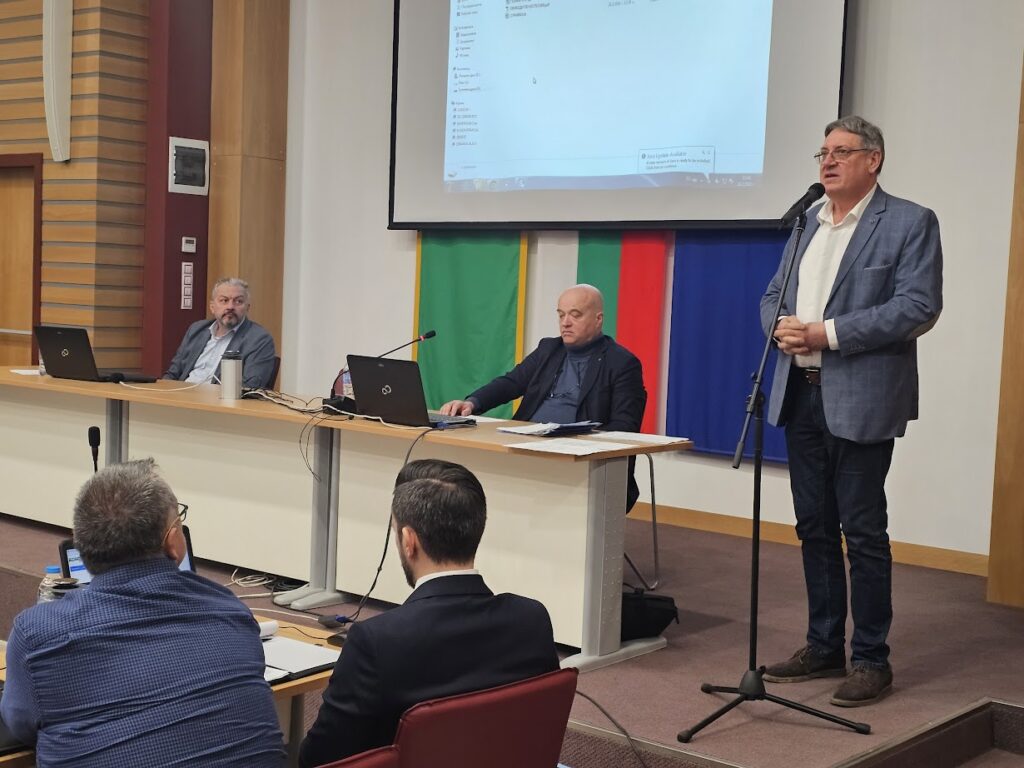
The situation at the municipal hospital in Sevlievo became the subject of a hearing of its manager, Dr Plamen Tsekоv, before the municipal council on 24 February.
The hearing followed a list of questions approved by the leaders of the councillors’ groups. Questions from the floor were not allowed, even though Tsekоv was speaking outside the council’s regular session, meaning the restrictions under its procedural rules were not in force.
At the hearing, the manager rejected claims that the hospital was in serious financial difficulty and said all departments were staffed with the necessary number of doctors and nurses, despite the nationwide shortage of medical professionals.
At the beginning of the hearing, he said the questions put to him “do not seek to uncover the true nature of the work in the hospital” and, although “reasonable”, did not address the real objective.
“The real problems have not been identified,” he told councillors.
According to Tsekоv, there were in practice no such problems.
He said the hospital had been financially stable for seven or eight years and that its position remained sustainable – something he said was “forgotten”.
The hospital employed 27 nurses full-time and another 10 part-time, according to figures for the inpatient wards and the dialysis unit. Around 12-13% leave each year, mainly for better pay elsewhere.
“We have parted ways respectfully with everyone who has left,” the manager said. Responding to accusations of arrogance towards staff, he added: “I’m not arrogant, I’m frank.”
There were 40 doctors working full-time and another 19 part-time. Of the 59 doctors, 33 were from Gabrovo region.
Asked how the hospital retained local doctors, Tsekоv replied: “We do not live in a dictatorship; everyone works where they want,” while insisting that efforts had been made to keep them.
He declined to discuss hospital salaries publicly, saying: “We are competing for every doctor and every nurse,” and asked: “Has anyone heard how much they are paid at the Gabrovo hospital?”
The overall picture presented was therefore one of a well-functioning and stable institution.
So much so that, after the hearing, one municipal councillor remarked ironically outside the chamber: “It’s so wonderful in this hospital that I feel like working there.”
Once again, a gap between claims of stability and reality
What happened between 24 February and 13 March, when the maternity department closed again, remains unclear.
There is no public information on whether the additional doctors expected to join the team actually started work, nor on the specific circumstances that led to the latest suspension of services.
Against this backdrop, claims that there are no problems are becoming increasingly difficult to sustain.
When a maternity unit closes twice within a few months, it is no longer simply a “temporary difficulty”. It is a sign of a systemic problem that can be explained away, downplayed or rephrased – but not concealed.






