



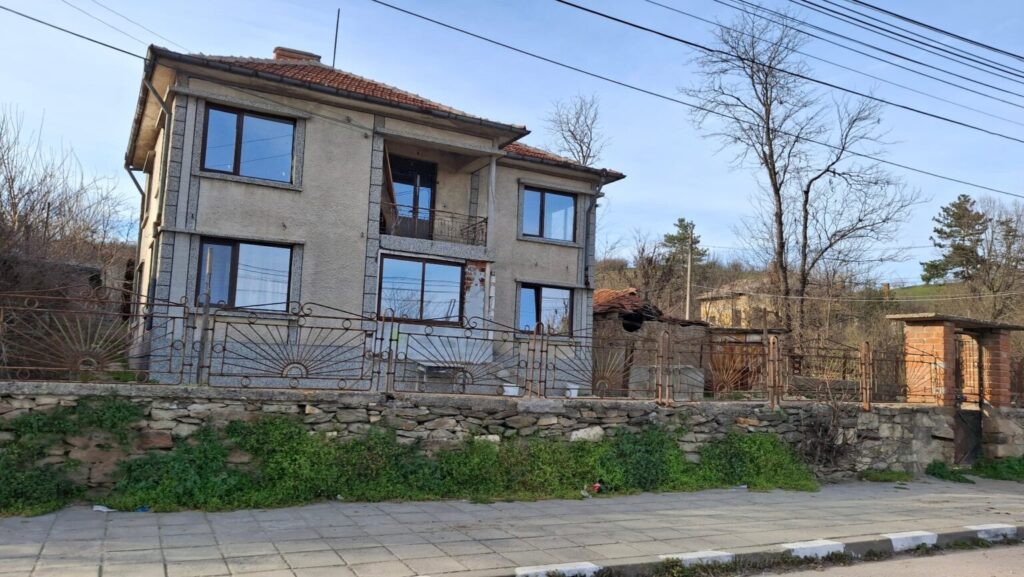
Hundreds of migrants from the Middle East were allegedly registered at addresses in Svilengrad and nearby villages without actually living there, allowing them to obtain legal access to Central and Western Europe. The scheme, which operated under the watch of local authorities, provided foreigners with the permanent address required to obtain Bulgarian identity cards, in exchange for payments of between €200 and €300 per person.
A ticket to Europe: how did the scheme work?
After being granted refugee status, foreigners are allowed to remain in reception and registration centres for no more than 14 days. To continue their journey towards Western Europe, they need an identity card, which cannot be issued without a permanent address.
This is where the so-called “address renters” came in. In exchange for payment, shared among property owners, intermediaries and state officials, refugees were registered at various addresses and entered into municipal records.
In some cases, more than 30 people were registered at small houses, even though the law requires a minimum of 10 sq m of living space per person. More strikingly, some registrations were made at plots where there were no habitable residential buildings at all.
Village mayor’s deputy reports her own property
One of the most paradoxical cases occurred in the village of Tyanеvo. An inspection ordered by Svilengrad mayor Milena Rangelova found that around a dozen migrants had been registered at a property owned by the village mayor’s deputy, Iliyana Asenova. Even more unusually, the complaint that triggered the investigation had been filed by Asenova herself.
In the same village, another 41 people were removed from the registers following an inspection. At the home of Asenova’s mother, Bonka Asenova, two refugees were found to have been registered.
Although the scheme appears to have become largely inactive in 2025 as the flow of migrants declined, its consequences remain. Because the people registered at the various addresses had never actually lived there, the municipality has had to carry out mass deregistrations through special commissions involving the police and the regional administration in Haskovo.
What the documents show
Official orders issued by Svilengrad mayor Milena Rangelova in early 2024 reveal the scale of the fictitious registrations:
- In an order dated 27 February 2024, 44 people were deregistered from a property at 30 Dimitar Blagoev Street following a complaint by its owner, Nikolay Kolchev.
- Another order dated 27 February 2024 removed 35 registrations from 4 Saedinenie Street.
- At two addresses on Tutrakan Street, 62 people were deregistered following complaints by property owners Dinka Zhelyazkova and Yanko Penev.
- Following a complaint by the mayor of the village of Svirkovo, Penyo Stoyanov, the address registrations of a further 30 foreigners were cancelled.
Questions that remain unanswered
One of the key questions is how the local administration allowed the registrations to take place, given that the State Agency for Refugees sends official letters to Svilengrad municipality for each person, specifying the exact registration address.
Why did the municipal authorities fail to react to the obvious overcrowding of private properties? And how were people registered at addresses where no houses even existed?
These are questions for which residents of Svilengrad are still waiting for clear answers.






