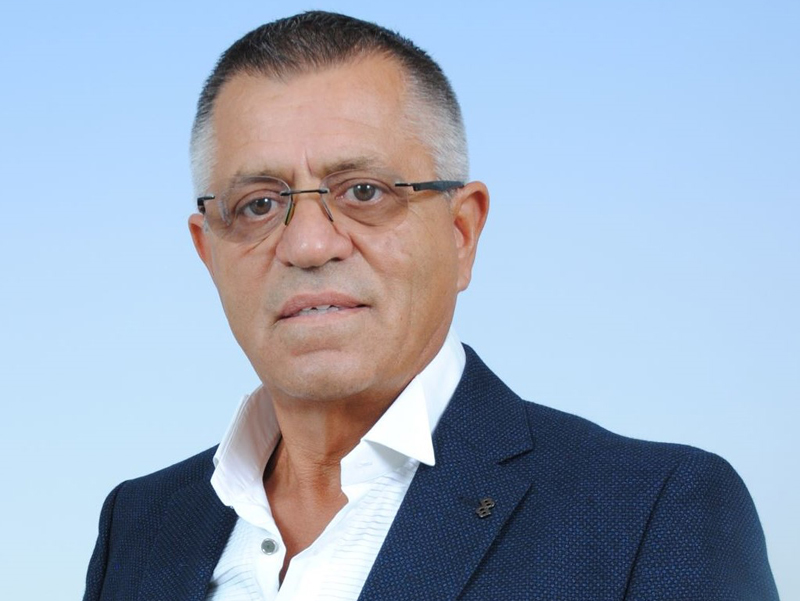
On January 28, the Municipal Council in Devin adjourned its meeting before addressing the last item—public statements, inquiries, opinions, and suggestions from citizens. The scandal stemmed from the refusal of Chairperson Karamfil Karov (DPS) to allow councilor Vladimir Georgiev (GERB) to film with his phone, as well as his desire to receive a response regarding the condition of the streets in the village of Breze.
“Turn Off That Camera!”
The atmosphere in the room was tense. With only a few minutes left on the agenda, Vladimir Georgiev (GERB) raised his phone to record the mayor’s responses to his inquiry about Breze. He requested a written response, but Karov announced that Mayor Zdravko Ivanov would answer verbally. Chairperson Karov immediately reacted with a call: “Can the camera be removed!” He insisted that filming was not allowed because “there is an online broadcast.” Georgiev disagreed, asserting that it was his right. Karov abruptly ended the discussion: “I am closing the meeting. Mr. Ivanov will not answer questions.” (Mayor of Devin Zdravko Ivanov was elected with the votes of DPS and BSP—editor’s note.)
Breze – The Village Waiting for Solutions
The case is not merely a dispute over videography. Georgiev hoped to receive a specific response from the mayor of Devin, Zdravko Ivanov, regarding the planned actions concerning the road to the cemetery park in the village of Breze, the sewage system, and the necessary repairs. In his written inquiry, the councilor emphasized that the residents of the village are struggling to visit the cemetery due to the poor condition of the road and the lack of proper infrastructure. “I believe this is an urgent problem that directly affects the health of the residents,” he wrote.
Who Has the Right to Stop Cameras?
From a legal perspective, public sessions of municipal councils are indeed “public,” meaning there should not be an explicit ban on filming by citizens, journalists, and elected councilors. Vladimir Georgiev unequivocally emphasizes that “there is no law prohibiting filming in public places, especially when it concerns public figures and open meetings.” His position is that if such a ban were imposed, it would constitute “an infringement on constitutionally guaranteed rights—the right to freely express oneself and disseminate information.”
Strong Words After the Final Bell
After the session was adjourned, Georgiev posted on Facebook that Chairperson Karov threatened the leader of the GERB council group, Velizar Shanov, with the words: “As long as you don’t remove him from the Municipal Council, there will be no funds for the village of Breze.” He also claims that Mayor Ivanov referred to him as an “influencer,” stating that he needs to choose one of two options—either be a municipal councilor or film for social media. “My position as a municipal councilor in no way hinders my role as an influencer,” Georgiev replies, insisting that he has an obligation to show citizens how decisions regarding their lives are made.
The specific issues facing the village of Breze once again went unanswered. “I will continue to insist on transparency and fairness,” Georgiev asserts, emphasizing that he will not back down.
Whether Georgiev’s inquiry will be heard at the next meeting or if the conflict will escalate further is still unclear. It is a fact that the session on January 28 ended prematurely. According to Georgiev, the violation of fundamental rights should not become the norm, especially at the local level. He continues to insist that “he will film to share with people what is really happening in the Municipal Council.” So far, there has been no official explanation from Chairperson Karov regarding why he halted the session and what his justification was for banning filming.