



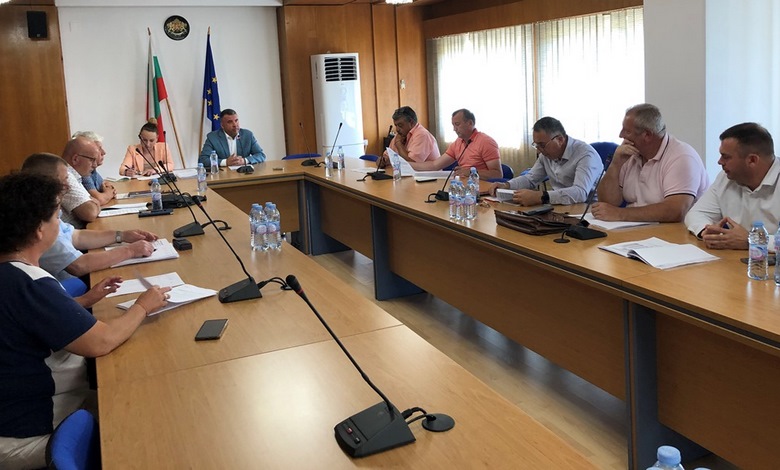
The meeting of the Water and Sewerage Association – Smolyan (AWSS), scheduled for 11:00 AM yesterday (July 10) in the regional administration building, was dismissed minutes after it started. The reason: the representative of the Municipality of Smolyan – Deputy Mayor Eng. Mariana Tsekova – requested to include an item for a 20-percent reduction in the water price exclusively for the residents of the Municipality of Smolyan. The AWSS chairman, regional governor Zahari Sirakov, declared the request procedurally inadmissible, and the lack of a valid agenda and quorum prompted the postponement of the meeting to July 17, 2025.
How did the Municipality of Smolyan block AWSS?
The rules for the organization and operation of water associations allow changes to the agenda no later than 21 days before the meeting. After that period, changes are only possible with the unanimous consent of all members (Article 11, paragraphs 2-4). However, Tsekova submitted the request at the very start of the meeting – without prior written procedure and without the consent of all association members, in which the state holds 35%, and the ten municipalities of the Smolyan region hold between 2% and 22% depending on their population. For this reason, Sirakov noted the absence of legal grounds to proceed to a vote at all.
A price the law does not recognize
Even if admitted, the item for a “20% lower price of water only for the Municipality of Smolyan” is legally inapplicable. Bulgarian legislation introduced already in 2015 the principle of a unified price for services throughout the entire designated territory (in this case, the whole Smolyan region). Different tariffs for individual municipalities cannot exist within one zone. Besides, the price is not set by AWSS but by the Energy and Water Regulatory Commission, according to the business plan of the operator “Water and Sewerage” Ltd. – Smolyan. A vote within the association cannot change it.
When populism unites rulers and opposition
The request for the reduction was included in Decision No. 21 of the Smolyan Municipal Council, adopted on May 15, 2025, with 24 votes in favor and none against or abstaining. “Just to clarify, these 20% mean the water price would drop from 5.70 to 4.50 leva,” calculated councilor Stoyan Ivanov (GERB) and added that Smolyan ranks second in the country for the most expensive water. “Apparently, the Energy and Water Regulatory Commission doesn’t dare to mess with consumers there because they are many, but here it allows itself to,” he stated. (Ivanov himself has been a financial controller of “Water and Sewerage” and should know that the Municipal Council of Smolyan’s decision is legally invalid. Moreover, it is legally incompetent.)
Stefan Sabrutev from the local coalition “Our Smolyan” “picked up the ball” from Ivanov and proposed that if the request is not accepted, the representative should “vote against everything.” (Like Ivanov, as a former regional governor, he knows that AWSS does not set the water price and how the association’s agenda is determined.) Without further debate, the councilors from across the political spectrum unanimously supported the proposal.
The truth that no one said aloud
The residents of the Smolyan region indeed pay one of the highest prices in the country – 5.70 leva per cubic meter including VAT, approved for the regulatory period 2022–2026. But even the lawyers present remained silent about the legal absurdities in the decision. Instead of sowing populism, the councilors could have earned their salaries (approximately one minimum monthly wage for a day’s work) and proposed at least one of these legal steps.
First. The Municipality of Smolyan holds 22% of the votes in the Water and Sewerage Association. Instead of blocking its agenda, the councilors could have earlier proposed a written amendment to the business plan – for example, requesting a more aggressive reduction in losses and electricity costs through the mandatory 14% investments in energy-efficient pumping stations, as indicated in the “Water and Sewerage” business plan for 2022–2026. Once such a correction is adopted, the Energy and Water Regulatory Commission (EWRC) is obliged to calculate a new lower price.
Second. The pricing regulation obliges water companies to publish the projected prices 30 days before submitting them to the EWRC. During this window, the Municipality could have submitted a motivated opinion and requested a public hearing, supported by an audit report on excessive expenses – a practice successfully applied in Ruse in 2022, where the price was adjusted downwards.
Third. The Water Act (Article 198k) allows the municipality to transfer water supply assets as contributions in kind to the capital of Water and Sewerage (W&S) companies. W&S Smolyan spends one-third of its budget on electricity. Installing photovoltaic capacity on its own reservoirs can reduce the electricity bill by up to 40%, which would be reflected in reduced electricity costs.
Fourth. Civil board for W&S Smolyan. The Municipal Council can delegate representation to experts and civil organizations with the right to access monthly reports, which would serve as an early warning system for poor management and uncontrolled expenses.
The councilors had—and still have—reasonable ways to reduce pressure on the wallets of Smolyan residents, such as requesting business plan adjustments, audits, participation in public hearings at the Energy and Water Regulatory Commission, direct investment in infrastructure, and social support.
Instead, they chose to seek solutions where the law explicitly forbids them, pretending to be concerned when in fact they are not.
The result is that the Smolyan councilors’ decision does not lead to cheaper water (not even by a penny) but effectively ties the hands of the regional governor. Due to the failed meeting, the Water and Sewerage Association – Smolyan remained without an approved budget for 2025 and without an approved investment program for W&S for 2025.The meeting of the Water and Sewerage Association – Smolyan (AWSS), scheduled for 11:00 AM yesterday (July 10) in the regional administration building, was dismissed minutes after it started. The reason: the representative of the Municipality of Smolyan – Deputy Mayor Eng. Mariana Tsekova – requested to include an item for a 20-percent reduction in the water price exclusively for the residents of the Municipality of Smolyan. The AWSS chairman, regional governor Zahari Sirakov, declared the request procedurally inadmissible, and the lack of a valid agenda and quorum prompted the postponement of the meeting to July 17, 2025.
How did the Municipality of Smolyan block AWSS?
The rules for the organization and operation of water associations allow changes to the agenda no later than 21 days before the meeting. After that period, changes are only possible with the unanimous consent of all members (Article 11, paragraphs 2-4). However, Tsekova submitted the request at the very start of the meeting – without prior written procedure and without the consent of all association members, in which the state holds 35%, and the ten municipalities of the Smolyan region hold between 2% and 22% depending on their population. For this reason, Sirakov noted the absence of legal grounds to proceed to a vote at all.
A price the law does not recognize
Even if admitted, the item for a “20% lower price of water only for the Municipality of Smolyan” is legally inapplicable. Bulgarian legislation introduced already in 2015 the principle of a unified price for services throughout the entire designated territory (in this case, the whole Smolyan region). Different tariffs for individual municipalities cannot exist within one zone. Besides, the price is not set by AWSS but by the Energy and Water Regulatory Commission, according to the business plan of the operator “Water and Sewerage” Ltd. – Smolyan. A vote within the association cannot change it.
When populism unites rulers and opposition
The request for the reduction was included in Decision No. 21 of the Smolyan Municipal Council, adopted on May 15, 2025, with 24 votes in favor and none against or abstaining. “Just to clarify, these 20% mean the water price would drop from 5.70 to 4.50 leva,” calculated councilor Stoyan Ivanov (GERB) and added that Smolyan ranks second in the country for the most expensive water. “Apparently, the Energy and Water Regulatory Commission doesn’t dare to mess with consumers there because they are many, but here it allows itself to,” he stated. (Ivanov himself has been a financial controller of “Water and Sewerage” and should know that the Municipal Council of Smolyan’s decision is legally invalid. Moreover, it is legally incompetent.)
Stefan Sabrutev from the local coalition “Our Smolyan” “picked up the ball” from Ivanov and proposed that if the request is not accepted, the representative should “vote against everything.” (Like Ivanov, as a former regional governor, he knows that AWSS does not set the water price and how the association’s agenda is determined.) Without further debate, the councilors from across the political spectrum unanimously supported the proposal.
The truth that no one said aloud
The residents of the Smolyan region indeed pay one of the highest prices in the country – 5.70 leva per cubic meter including VAT, approved for the regulatory period 2022–2026. But even the lawyers present remained silent about the legal absurdities in the decision. Instead of sowing populism, the councilors could have earned their salaries (approximately one minimum monthly wage for a day’s work) and proposed at least one of these legal steps.
First. The Municipality of Smolyan holds 22% of the votes in the Water and Sewerage Association. Instead of blocking its agenda, the councilors could have earlier proposed a written amendment to the business plan – for example, requesting a more aggressive reduction in losses and electricity costs through the mandatory 14% investments in energy-efficient pumping stations, as indicated in the “Water and Sewerage” business plan for 2022–2026. Once such a correction is adopted, the Energy and Water Regulatory Commission (EWRC) is obliged to calculate a new lower price.
Second. The pricing regulation obliges water companies to publish the projected prices 30 days before submitting them to the EWRC. During this window, the Municipality could have submitted a motivated opinion and requested a public hearing, supported by an audit report on excessive expenses – a practice successfully applied in Ruse in 2022, where the price was adjusted downwards.
Third. The Water Act (Article 198k) allows the municipality to transfer water supply assets as contributions in kind to the capital of Water and Sewerage (W&S) companies. W&S Smolyan spends one-third of its budget on electricity. Installing photovoltaic capacity on its own reservoirs can reduce the electricity bill by up to 40%, which would be reflected in reduced electricity costs.
Fourth. Civil board for W&S Smolyan. The Municipal Council can delegate representation to experts and civil organizations with the right to access monthly reports, which would serve as an early warning system for poor management and uncontrolled expenses.
The councilors had—and still have—reasonable ways to reduce pressure on the wallets of Smolyan residents, such as requesting business plan adjustments, audits, participation in public hearings at the Energy and Water Regulatory Commission, direct investment in infrastructure, and social support.
Instead, they chose to seek solutions where the law explicitly forbids them, pretending to be concerned when in fact they are not.
The result is that the Smolyan councilors’ decision does not lead to cheaper water (not even by a penny) but effectively ties the hands of the regional governor. Due to the failed meeting, the Water and Sewerage Association – Smolyan remained without an approved budget for 2025 and without an approved investment program for W&S for 2025.






