



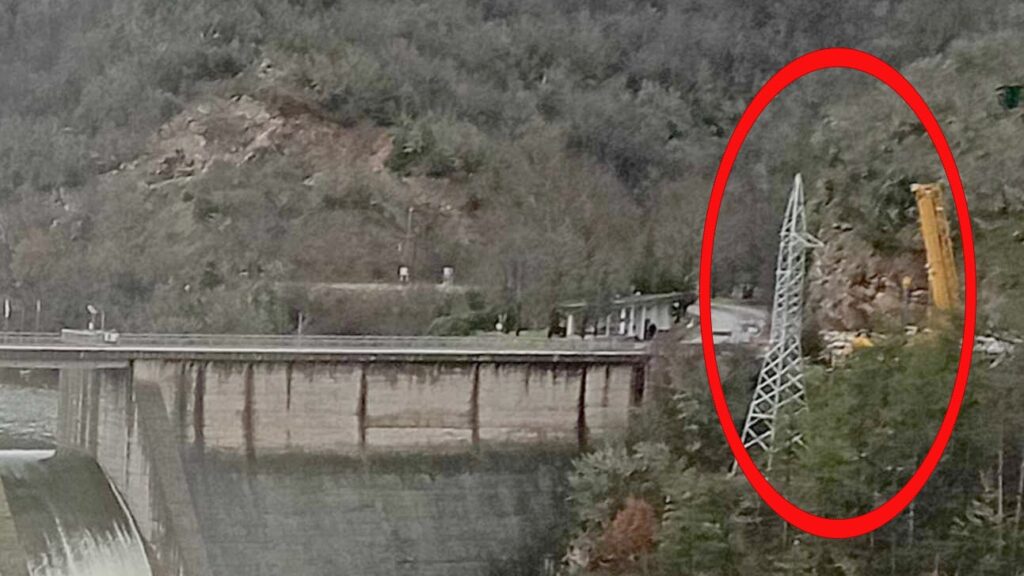
Photo: Ivan Atanasov
The Ivaylovgrad Dam is overflowing, and nearly one-third of the electricity it can produce is not flowing into the power grid but is instead “leaking” into the Arda River. This is due to the reduced capacity at which the hydroelectric power plant is currently operating. It has three units, but only two are in operation, and they are not working at 100% capacity because there is no suitable cable to feed the generated electricity into the central grid.
As a result, the state is missing out on profits from energy whose cost price is currently symbolic.
A statement by the owner, National Electric Company (NEC EAD), dated January 9, says that “during the high wave period, the Ivaylovgrad hydroelectric power plant is operating around the clock.” However, it does not specify at what capacity it is operating.
Currently, one of the three powerful turbines is shut down because the transmission line to the hydroelectric power plant is old and does not have the necessary capacity to transmit all the power produced, which is 120 MW (3 x 40).
Currently, the average price for 1/MWh of electricity is €194.57, multiplied by 96 hours, which amounts to over half a million euros in lost profits until January 11. (The dam overflowed at midnight on January 7 – ed.).
Repairs during high water
Construction of a new, more powerful power line began just a year ago. It is intended to connect the Ivaylovgrad hydroelectric power plant to the national power grid. Work on it is still ongoing. An iron lattice tower has been installed next to the dam wall. However, there are still no wires attached to it, and a crane can be seen at the site. It remains a mystery why these activities are being carried out in winter, during the highest water levels for the cascade.
Fifteen years waiting for a cable
The mystery becomes complete when we look back at history. The old turbines had a capacity of 108 MW (3 x 36 MW), and the new Kaplan-type turbines were modernized back in 2011, increasing the capacity to 120 MW. Since then, 15 years have passed, during which the state-owned company has failed to provide an adequate connection to the grid. For years, the power of the dam has been virtually unusable.
This case is yet another example of poor management of national resources. When the hydroelectric power plant is not operating at full capacity, we are losing cheap and clean energy. This directly affects energy security and consumer prices. Publicizing the problem may speed up the completion of the project, and faster connection will stop the leakage of state money in the form of overflowing water.






