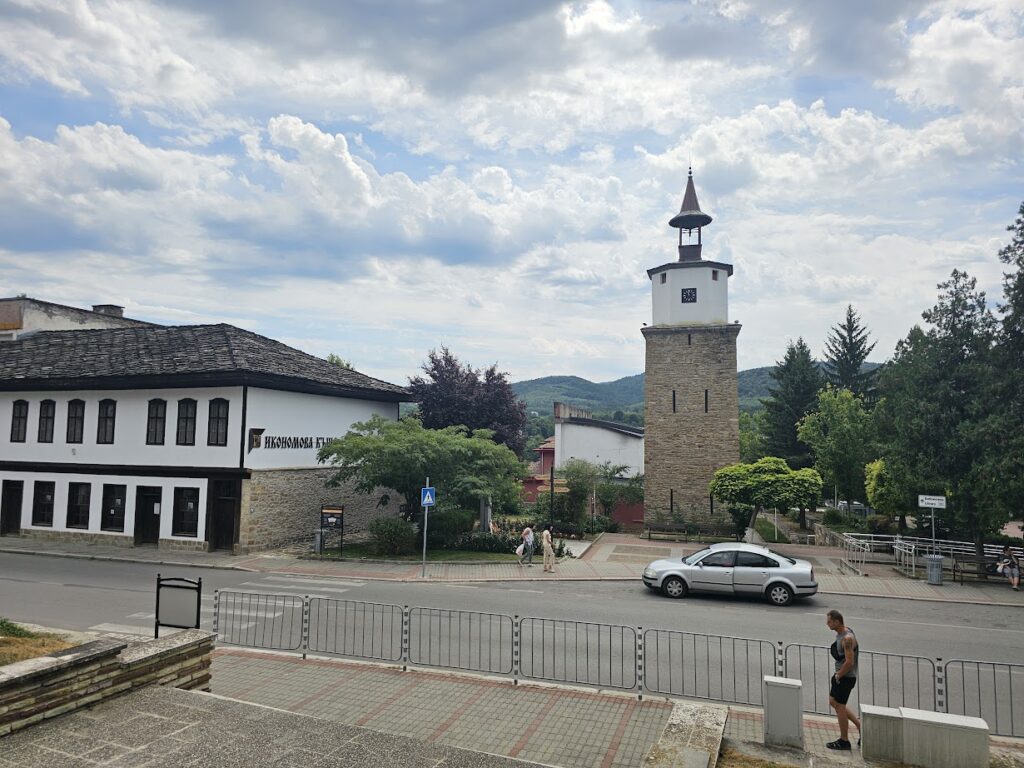
Photo: “For the Truth.”
For years, the municipality of Dryanovo has had problems fulfilling its obligations under the Access to Public Information Act, but for years the municipal administration has done nothing to update the data and resources to which citizens should have free access.
In early 2025, the Access to Information Program (AIP) newsletter published an analysis of the state of access to information in the Gabrovo region. The analysis indicates that of the four municipalities in the Gabrovo region—Gabrovo, Sevlievo, Tryavna, and Dryanovo, only the municipality of Dryanovo is not fulfilling its obligations under the Access to Public Information Act (APIA). One month before the end of the year, this situation has not changed, according to “Za Istinata”.
The municipality maintains an “Access to Information” section on its website, but what is published there?
In the “annual reports” section of this section, there is not a single report under the Access to Public Information Act. There are two reports on the assessment of user satisfaction with the administrative services provided by the municipality. Both are old – for 2022 and 2023. It is good that these reports are public, even though they are not kept up to date, but they have nothing to do with access to information.
In the “access to information” section, there is another section called “public registers.” One would expect the registers of applications received under the Access to Public Information Act to be published there, but this is not the case. There are registers of dogs in the municipality for 2021, 2022, and 2023, a register of municipal companies and enterprises, a register of disposals of municipal property, waste disposal sites, etc., but none of the published registers contain information on how the municipality responds to requests under the Access to Public Information Act, how many requests have been received over the years, how many have been responded to on time, how many have been refused information, and whether any of the applicants have taken legal action for the refusal of information.
The only thing that’s relevant to access to public information in the Municipality of Dryanovo is the internal rules for access—detailed in appendices that give guidelines on how to go about getting public information.
Against this backdrop, it is not surprising that Dryanovo ranks 146th out of 265 Bulgarian municipalities in terms of transparency.
This is evident from the latest transparency audit for 2024, conducted by the Access to Information Programme (AIP), which could still be considered relevant today, judging by what the Municipality of Dryanovo publishes.
Compared to all Bulgarian institutions, the municipality’s rating is even lower – 213th out of 296 Bulgarian institutions, with the municipality of Omurtag in last place, the municipality of Rudozem in 294th place, and the Central Commission for Combating Anti-Social Behavior by Minors in second-to-last place. The most transparent of the Bulgarian executive institutions is the Municipality of Sliven, which scored 97 points, compared to 54 for Dryanovo.
If we zoom in and focus only on the Gabrovo region, the Municipality of Dryanovo ranks seventh in terms of transparency among nine institutions.
Sevlievo Municipality ranks first, followed by the Regional Health Inspectorate, Gabrovo and Tryavna Municipalities, the Regional Administration, the Regional Directorate of Agriculture, the Regional Education Administration in second-to-last place, and the Regional Directorate of the Ministry of Interior in last place for years.