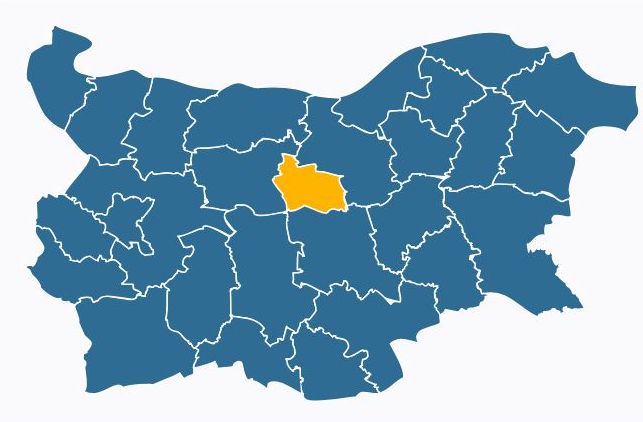
Every third resident of Gabrovo Province is over the age of 65. The region has a significantly unfavorable demographic situation in 2023, ranking just after the last province in this category—Vidin. The natural increase is twice as low as the national average. Against this backdrop, incomes and pensions are rising, while the poverty level is among the lowest in the country.
The data is from the “Regional Profiles: Development Indicators” study for 2024 conducted by the Institute for Market Economics (IME).
In 2023, the gross annual salary is just over 17,000 levs, while the average pension is 748 levs. Due to higher incomes in Gabrovo Province, fewer people live below the poverty line compared to the national average.
The study notes that in 2022, the gross domestic product continued to grow, reaching nearly 22,000 levs per capita, placing the region seventh in the country.
Gabrovo has long been known as the region with the highest amount of funds absorbed through EU programs, following the capital. Almost 5,000 levs per person have been disbursed to beneficiaries through operational programs, with the municipality of Gabrovo receiving the most funds.
Foreign direct investments in the region reach 4,400 euros per person, placing the province fourth in the country for this indicator. The share of income from product exports (29%) also significantly exceeds the national average (40%), which is understandable given that the region is highly export-oriented.
Gabrovo is among the top three regions in healthcare performance, following Pleven and the capital, according to the study.
The average life expectancy of residents in the province is increasing and is very close to the national average. The number of general practitioners per capita is also high, but there is a shortage of specialist doctors, which likely causes many residents to seek medical assistance in neighboring provinces, particularly in Pleven.
The number of hospital beds is below the national averages. However, pharmacies are sufficient to meet the demand and needs.
So far, so good.
Despite high salaries, the working-age population in Gabrovo is third lowest in the country after Vidin and Yambol. The natural increase rate is the second lowest in the country (after Vidin) at -15.1‰ (compared to -6.8‰ nationwide). Only the mechanical growth rate is positive (3.6 per thousand), which is wholly insufficient to compensate for the natural decline.
The deepening trend of aging is clearly visible in the age structure of the population. The share of children under four years old is 3.5% (compared to 4.5% nationally), while the proportion of people over 65 is 30.3% (compared to 23.8% nationally).
Due to its industrial profile, the region has a relatively high percentage of workers with secondary education—61%, compared to 55% nationally.
However, education does not meet the needs of businesses, which has been a problem for years, with little or no effective action taken to address it. The alignment between vocational education and the economic profile is below 40%, compared to 53% nationally in 2023. Businesses have long demanded training that matches the demand for professions, yet vocational high schools continue to offer the same profiles every year. Therefore, it is no surprise that a very small percentage of graduates work in their field of study.
Exam scores from the matriculation and external assessments are below the national averages; comforting is the fact that failing grades are also low.
The picture of security in the region is characterized by few policemen and rising crime rates. In 2023, there are four police officers for every thousand residents, which is slightly below the national average. However, the number of crimes against individuals and thefts is increasing, while the detection rate for crimes is declining. However, it is somewhat reassuring that the solved crimes rate (69%) is still higher than the national average (53%).
The roads in Gabrovo Province that can be said to be in good condition are few, but in terms of ecology, the region performs very well, with nearly 90% of waste recycled compared to under 80% nationwide.
Cultural and tourism life is among the most vibrant, securing the province a place in the top five in this category in 2023. A key reason for this is the exceptionally high number of museum visits—3,544 per thousand residents in the region (compared to 770 per thousand in the entire country). Theater attendance is also relatively high.
Visits to libraries and cinemas are increasing, but they do not reach the national average per capita. Accommodation facilities are also underutilized, with overnight stays in tourist establishments being half those recorded nationwide.
The population of Gabrovo Province in 2023 is 94,862 people. The province covers an area of 2,023 square kilometers and includes four municipalities and 349 populated places. Almost 80% of the population resides in the towns of Gabrovo, Sevlievo, Dryanovo, and Tryavna.