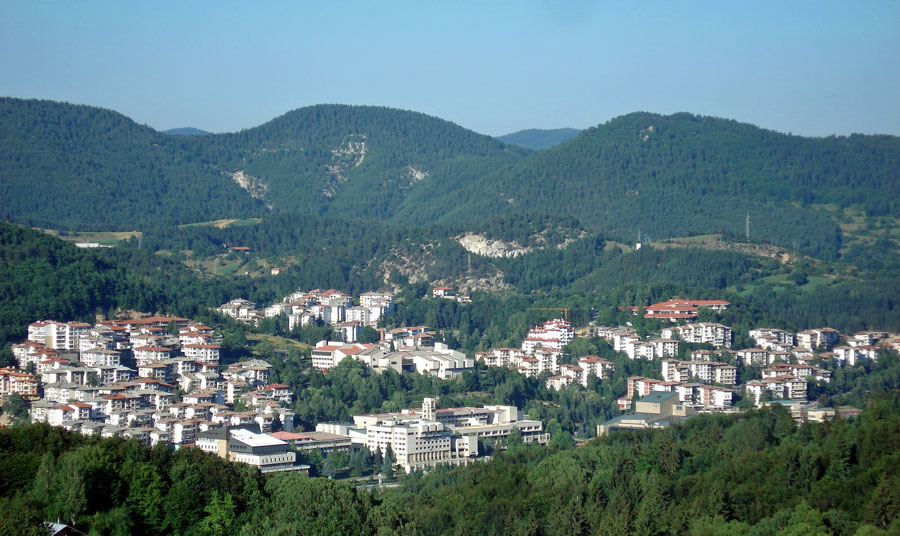
“The Strong Economic Growth in Several Smaller Regions Leads to a Slight Decline in the Capital’s Share of the Country’s Gross Domestic Product” – analysts from the Institute for Market Economics (IME) note in their latest report, “Regional Profiles 2024.” According to them, over the past two years, the Bulgarian economy is returning to relatively stable growth following the setbacks caused by the pandemic, with some smaller regions managing to increase their contribution to national production. However, imbalances remain visible, and genuine catch-up is still the top priority for several regions.
Smolyan and Kardzhali are two areas in the southern part of the country sharing similar geographical features (mountainous terrain, border corridors, and predominantly medium to weaker infrastructure) but have developed differently in recent years. What are the key economic indicators with which the two regions entered 2024? What are the trends in income, the labor market, and social development, and what are the major challenges facing local administration, the education system, and the investment climate? In the following sections, we will closely examine the data provided by IME and draw parallels between Smolyan and Kardzhali in every key category: from economic development and income to healthcare, demographics, cultural life, and the environment.
Economic Development
Smolyan: A Modest Upswing
According to the “Regional Profiles 2024” by the Institute for Market Economics, the gross domestic product (GDP) in the Smolyan region continues to grow, reaching 16,400 BGN in 2022. While this absolute value remains relatively small in the context of the national picture, the dynamics are positive. The report highlights that the economy here is gradually shaking off the remnants of economic uncertainty brought about by the COVID-19 pandemic and restrictions on international tourism.
However, it should be noted that the overall size of economic activity in Smolyan is far more modest compared to leading regions such as Sofia (the capital), Plovdiv, Stara Zagora, or Varna. Yet it is precisely the smaller regions that have a chance to demonstrate higher relative growth year-on-year. Positive signals for Smolyan come from the rapid recovery of local tourism (especially winter tourism in Pamporovo) and the gradual expansion of some production activities. Despite this, the IME notes that the output per employee in the region ranks among the lowest in the country (approximately 69,000–70,000 BGN per employee), suggesting low productivity and limited scale of local businesses.
Kardzhali: Modest GDP Growth, but Positioned Low in the National Ranking
A similar trend is observed in the Kardzhali region, which, like Smolyan, has a relatively small economic profile. There, the GDP per capita also rises significantly in 2022 (according to IME, it is now 15,400 BGN per person), but it remains far below the national average (26,000 BGN). The positive contribution primarily comes from improvements in regional entrepreneurship, slight increases in consumption, and new micro-investments.
Despite the growth, Kardzhali remains among the regions with the weakest overall contribution to the national economy, similar to Vidin and Silistra. The Institute for Market Economics notes that businesses in Kardzhali are still not particularly active, and the output generated by local enterprises hovers around 69,000–70,000 BGN per employee—an equally low level as that in Smolyan.
Comparison: Both regions show a certain economic upswing compared to previous periods, but Smolyan is gradually positioning itself as a destination with an established (winter) tourist brand and slight industrial specialization in the food sector. Kardzhali relies more on its border location and certain industrial zones, but still lags behind. In both regions, the insufficient scale of private investments, low productivity, and a limited domestic market remain obstacles to faster economic catch-up with the national averages for Bulgaria.
Income and Living Conditions
Smolyan: Wages on the Rise, But Unemployment Above Average
In Smolyan, wages are trending upwards. According to IME, the average gross salary in the region in 2024 approaches and sometimes exceeds 1,700–1,800 BGN per month. While this lags behind the national average (over 2,100–2,200 BGN), it still reflects a positive trend. Pensions are also increasing, exceeding 750–760 BGN, yet they remain lower than in the capital (where the average pension is 957 BGN). The poverty level in Smolyan has decreased over the past year, as reported by the authors of the report—this is an encouraging sign, even though the region is still dominated by an aging population with limited economic activity. There is a slight “movement” in tourism, seasonal employment, and some smaller production sectors, which also “boosts” incomes for part of the working population.
Kardzhali: The Lowest Pensions in Bulgaria
According to the IME analysis, Kardzhali continues to have the lowest pensions in the country—633 BGN as an average monthly pension compared to 784 BGN nationally in 2023. The gap is significant and stems from multiple factors: weaker economic activity, a considerable share of people nearing retirement age, proximity to other labor markets (including labor migration to Turkey), as well as lower contribution rates and past incomes. The average annual gross salary in Kardzhali is also rising slowly—only by 8% in 2022 compared to the national pace of 13%. This confirms a trend of weaker income growth, and alongside this, the share of the population living below the national poverty line rises to 27.3%. Despite a relatively low Gini coefficient (indicating that inequalities within the region are not overly pronounced), the problem remains the very low income level affecting a large number of households.
Comparison: Both regions continue to lag behind the average standard of living in Bulgaria. In Smolyan, pensions and wages are slightly higher compared to Kardzhali, but unemployment remains a significant challenge there as well. Kardzhali notably suffers from chronically low wage growth and the lowest pensions in the country. Poverty in the Rhodopes is traditionally deeper, and incomes there are often supplemented by seasonal migration or relocation to larger cities.
Labor Market
Smolyan: Unemployment Rises to 10.2%
The labor market results in Smolyan are mixed. According to IME and NSI, employment increased in 2023 (reaching 74.7%), but simultaneously, unemployment also rose to 10.2%—significantly above the national average (5.3%). At first glance, this seems paradoxical, but it may be explained by the activation of economically inactive individuals, which raises the number of job seekers. A concerning trend is the decreasing share of the population of working age—only 56.0% compared to 58.5% nationally. This is logically attributed to aging and negative net migration (known as out-migration). The good news is that the educational status of the workforce remains relatively good: only 13% of people aged 25–64 have primary or lower education (compared to 15% nationally), while 25% have higher education (compared to 31% nationally).
Kardzhali: Also 10.2% Unemployment, But with Lower Employment
In Kardzhali, the labor market appears to be facing even more serious challenges. The employment rate in 2023 decreases to 70.6%—well below the national average (76.2%). Meanwhile, unemployment also rises to 10.2%, the same as in Smolyan, but with lower employment, which is a more alarming indicator. The main problem for the labor market in Kardzhali is the educational structure: the share of the workforce with higher education drops to 22% (compared to 25% in Smolyan and 31% nationally). Even more concerning is that 20% have primary or lower education, which hinders attracting employers in medium- and high-tech industries.
Comparison: Both regions exhibit a double-digit unemployment rate—almost double the national level. Kardzhali lags in both employment and workforce qualifications. In Smolyan, the picture is slightly more favorable regarding education and the employment rate, but unemployment remains an issue. In both regions, aging and limited labor.
Investments
Smolyan: Expenditures on Fixed Assets Above 3,000 BGN Per Person
Following the COVID crisis, some businesses in Smolyan are becoming more active: expenditures for acquiring fixed tangible assets (FTA) exceeded 3,100 BGN per person in 2022. This marks an improvement compared to previous years; however, it remains far behind the leaders in the country (for example, Sofia at 8,800 BGN per person). Foreign direct investments (FDI) have also increased, reaching 866 euros per person—still a low level, yet showing a stable upward trend. Smolyan ranks among the last in the country in terms of labor productivity, but the positive aspect is that the share of export revenues remains respectable (around 20%). However, it remains to be seen whether public or private investments will enhance infrastructure and improve connections with the interior of the country to expand the scope of local business.
Kardzhali: Under 2,000 BGN in Fixed Asset Expenditures Per Person, But Good Export Share
In 2022, Kardzhali also shows slight positive signals: expenditures on fixed tangible assets reach 1,800 BGN per person, which is better than the previous year, but still places the region at the bottom of the ranking (alongside Vidin and Haskovo). Foreign direct investments also increased, reaching 3,000 euros per person, which is even more than in Smolyan (866 euros). This may be influenced by the border location and a certain interest from Turkish and other foreign investors, especially in sectors like textiles and lighter manufacturing.
Interestingly, the share of exports in net sales revenues is 38% (compared to 20% in Smolyan and 29% nationally). This indicates that although the overall economy of Kardzhali is not large, it is relatively oriented toward international markets. This is a positive signal, but it still does not change the overall lagging behind.
Comparison: Both regions are experiencing an uptick in investment activity. Smolyan spends approximately 3,100 BGN per person on fixed tangible assets, while Kardzhali allocates 1,800 BGN. However, in terms of foreign direct investments, Kardzhali (3,000 euros per person) significantly surpasses Smolyan (866 euros per person). Smolyan relies more on the domestic market and tourism, whereas Kardzhali demonstrates an intriguing focus on exports and cross-border logistics connections.
Infrastructure
Smolyan: No Railway Lines, But Higher Quality Roads
Smolyan suffers from a lack of railway connectivity, as well as the absence of motorways and first-class roads. The mountainous terrain and distance from major transport corridors are leading issues: the density of the road network is below the national average, increasing costs and delaying the transport of goods and people. The good news is that the quality of existing roads is relatively high—58% of the road surface is in good condition (compared to 40% nationally).
The access of households to the internet has decreased slightly, but the values are close to the national averages. A significant issue in Smolyan’s settlement network is access to public sewage systems: only 71% of the population has access to sewage (compared to 75% nationally), and only 45% of the sewage infrastructure is connected to treatment plants (compared to an average of 67%).
Kardzhali: Weak Railway Network, Low Share of Motorways
In Kardzhali, the density of the railway network is among the lowest in the country. While there are some railway lines, there is no full-scale development; furthermore, motorways and first-class roads constitute only 11% of the network (compared to 19% nationally). This hampers access and slows economic development, particularly for industries that rely on fast logistics. The share of road surfaces in good condition is approximately 35%, which is lower than that in Smolyan.
Similar to Smolyan, the sewage network is underdeveloped in Kardzhali. Only 43% of the population lives in settlements with public sewage systems, compared to 71% in Smolyan and 75% nationally. Connections to treatment plants are only 38%. Access to the internet is also below the national average.
Comparison: Both regions share a common issue: a lack of major transportation projects, challenging mountainous terrain, and insufficient resources allocated for modernizing key road arteries. However, Smolyan performs slightly better in terms of “quality of road surface,” while Kardzhali has a higher road density but with poorer quality. In both cases, the absence of railway connections is a significant limiting factor for industrial investments.
Taxes and Fees
Smolyan: Relatively Low Levels, Especially in Retail
The “Regional Profiles 2024” indicates that local taxes in the Smolyan region are characterized by lower rates compared to national averages. The most noticeable difference is in the tax on retail trade (8.02 BGN/sq. m compared to 13.09 BGN/sq. m nationally). The vehicle tax (1.38 BGN/kW) is also lower than the average (1.56 BGN/kW), which somewhat alleviates the burdens on local businesses and residents. Among the six municipalities in the region, the lowest rates are in Borino, while the highest are in Dospat. Meanwhile, the tax rates on non-residential properties owned by legal entities are higher than the national average, though the differences are not striking.
Kardzhali: Also Lower Taxes, But With Some Exceptions
Kardzhali traditionally maintains lower or comparable local tax levels to national rates. For retail trade and non-residential properties, the rates are below average. However, taxes on the transfer of property and vehicles are slightly higher than the averages. It is important to note that municipalities in Kardzhali have a limited tax base, which often leads to lower own revenues and difficult budget implementation. A similar situation exists in Smolyan, but there, the coverage of municipal expenditures by local revenues is even lower.
Comparison: In both Smolyan and Kardzhali, the tax burden is not a significant factor burdening businesses; on the contrary, taxes are relatively low. Unfortunately, this does not always create a competitive advantage, as the other conditions necessary to retain or attract investors are lacking.
Administration
Smolyan: Progress in E-Services, but Low Transparency
The self-assessment of local administrations in Smolyan regarding progress in e-government and “one-stop-shop” administrative services has improved, yet remains below the national average. Their transparency rating is also below average—63.4% compared to 69.3% nationwide. Smolyan ranks among the top three regions with the lowest share of own revenues in the total revenue of municipal budgets (16% compared to 27% nationally). The coverage of municipal expenditures by local revenues stands at 48% (versus 74% nationally)—the second-lowest value after Targovishte. This indicates a strong dependency on the central budget and EU projects.
Kardzhali: Second to Last in Administrative Performance
In Kardzhali, the situation is not significantly better. According to IME data, the region occupies second-to-last place in terms of performance on various administrative criteria (with Vidin being last). The low self-assessments for e-government and administrative services indicate that the local administration is still not sufficiently open and digitized. Transparency in the municipalities (67.8%) is slightly higher than in Smolyan (63.4%), but still below the national average (69.3%). The share of own revenues (18%) is also very low, and the coverage of municipal expenditures by local revenues is 56% (compared to 74% nationally), further confirming the limited financial independence of local government in Kardzhali.
Comparison: Both Smolyan and Kardzhali are heavily dependent on transfers from the state budget and funds from EU operational programs. Their administrative capacity is below the national average, and transparency is relatively low. While Smolyan seems to show some progress in the digitization of services, the overall levels in both regions are unsatisfactory.
Demography
Smolyan: One of the Most Aging Regions
Smolyan ranks among the regions with the most aging population—28.9% of the residents are aged 65 and older (compared to 23.8% nationally). The share of small children (aged 0–4) is the lowest in the country—only 2.9%. Accordingly, the natural growth rate is -11.8‰ (versus -6.8‰ for the country), and the mechanical growth rate is also negative (-1.6‰)—the lowest in Bulgaria.
This practically means that Smolyan is “shrinking” due to both higher mortality rates and ongoing emigration (both internal and external). These trends threaten the future potential of the economy and social life in the region.
Kardzhali: A Leader in Mechanical Growth, Yet with an Aging Population
Paradoxically, Kardzhali boasts the highest mechanical growth rate in the country, primarily due to a strong influx of people across the border from Turkey (approximately +3.5% annually). The natural growth rate is more favorable than the national average (-6.5‰ compared to -6.8‰ nationally). Nevertheless, the local population is also aging: 26.4% are over 65 years old, while the share of children aged 0–4 is only 4.1%.
Although the influx of people through migration “fills” the region, its economic structure fails to capitalize on these demographic processes. Many of those who return are of retirement age or use Kardzhali as a temporary residence.
Comparison: While Smolyan is literally depopulating, Kardzhali has a positive mechanical growth rate. However, aging is a common problem for the entire Rhodope region. The specificity of Kardzhali is that a significant portion of the “new arrivals” are not young specialists who remain permanently, but mainly retirees or individuals who reside there temporarily. In this way, Smolyan permanently loses its population, whereas Kardzhali partially “replaces” its young emigrants with retirees or through short-term migration.
Education
Smolyan: Second Best Performance in Matura Exams and Nearly Full Enrollment in Lower Secondary Education
Smolyan traditionally excels in educational indicators. The IME highlights that the region ranks next to the capital in the performance of the Matura exam in Bulgarian language and literature (average score of 4.48 compared to 4.30 nationally). The share of poor grades is only 4.1% (compared to 8.7% nationally). The net enrollment rate in grades V–VII reaches 95%—the highest in Bulgaria—while the share of students who repeat a year is exceptionally low (0.3%).
The enrollment rate for children in kindergartens remains high (97%). Despite these good results, the index of compatibility between vocational education and the economic profile is only 34.8 points (compared to 53.1 points nationally). This suggests that many graduates from Smolyan schools tend to choose specialties that do not fully align with local needs.
Kardzhali: Weak Performance in Matura Exams and Limited Higher Education System
In Kardzhali, education remains the Achilles’ heel of the region, ranking near the bottom alongside areas like Sliven and Lovech. The average score in the national external assessment after grade VII (mathematics) is 36.8 points, compared to a national average of 42.9 points, while the Matura exam score in Bulgarian language and literature is 4.22 compared to 4.30 nationally. The share of poor grades in the Matura exam reaches 14.7%.
Enrollment in lower secondary education is among the lowest in the country, although the rate of repeat students is not very high. The issue is that higher education is virtually absent in the region, with only 3.6 students per thousand inhabitants (compared to a national average of 29.6). A significant percentage of young people choose to leave the region for higher education and often do not return.
Comparison: Smolyan demonstrates some of the best educational achievements in the country, while Kardzhali is on the opposite end of the spectrum. It is clear that Smolyan has well-functioning schools and qualified teachers, which positively impacts the literacy and culture of the students. In contrast, Kardzhali suffers from a long-term outflow of students, a lack of sufficiently qualified teachers, and more serious socio-economic issues that hinder good education.
Healthcare
Smolyan: Practically 100% Insured and Relatively Sufficient Hospital Beds
The Smolyan region exemplifies high coverage of health insurance—almost the entire population is covered. The average life expectancy is one of the highest in Bulgaria, and child mortality rates are below the national average. However, the healthcare network struggles with a shortage of qualified specialists, even though the number of general practitioners is adequate. The number of beds in multidisciplinary hospitals (6.0 per thousand people) is close to the national average (6.1 per thousand). However, the utilization rate of hospital beds is lower—48% compared to a national average of 56%.
Kardzhali: Chronic Shortage of Doctors and Hospital Beds
While the percentage of insured individuals in Kardzhali is also high, the region faces a severe shortage of medical personnel and hospital facilities. It has the lowest number of general practitioners and specialists relative to the population (one general practitioner for every 2,950 people, compared to an average of 1,701 nationally). In terms of hospital beds, the figure stands at 3.8 per thousand people, which is drastically lower than the national average (6.1).
The relative number of pharmacies in Kardzhali is also significantly below the average. When considering the healthcare system as critical infrastructure for quality of life, Kardzhali experiences serious deficiencies that directly limit access to and the quality of medical care.
Comparison: Smolyan is in a much better condition regarding its healthcare system, although it is not among the leaders in the country. Kardzhali, on the other hand, suffers from a lack of hospital beds and specialists, which particularly affects older patients, who continue to increase in number demographically.
Security and Justice
Smolyan: The Lowest Recorded Crime Rate in the Country
Smolyan stands out as the region with the lowest number of registered crimes (5.0 per thousand people compared to a national average of 11.3). The share of solved crimes is 63%—above the average (53%). Contributing factors to these positive indicators include the relatively small population, traditionally peaceful social environment, and good coordination among law enforcement agencies.
The workload of the courts is low, resulting in very swift justice delivery. Of the concluded criminal cases, 98% are resolved within three months (compared to a national average of 91%). Administrative cases are similarly efficient, with 88% resolved within three months.
Kardzhali: Also Low Crime Levels and High Clearance Rates
Kardzhali traditionally ranks among the top three regions with the best security indicators. In 2023, the number of crimes slightly increased but remains low—5.7 per thousand people. The clearance rate is 69%, even higher than that of Smolyan. In Kardzhali, the workload of the District Court is quite low, while the Administrative Court experiences relatively high caseloads; nevertheless, the share of cases resolved within three months is impressively high (over 78% for administrative cases and 85% for civil cases).
This positions Kardzhali as one of the safest regions in Bulgaria, alongside Smolyan. Paradoxically, despite their economic lag, both regions experience a notably peaceful criminal environment.
Comparison: In terms of order and security, both Smolyan and Kardzhali excel. The relatively small population size and community ties in the Rhodopes contribute to a peaceful environment, while the judicial system operates efficiently, likely due to lower caseloads compared to larger cities.
Environment
Smolyan: Highest Share of Forests and Least Disturbed Areas
Smolyan leads the ranking in terms of nature conservation. Seventy-one percent of its territory is forested (compared to a national average of 33%), and disturbed lands account for only 0.1%. The need for cooling during the summer is the lowest in Bulgaria—logical considering the mountainous climate. In 2022, household waste amounted to 355 kg per person (compared to 488 kg nationally), with 66% of it being sent for treatment and recycling (against a national average of 76%). Although the recycling rate is below average, there is a positive trend of increase.
Smolyan has a significant amount of installed renewable energy sources (RES) per capita—almost three times the national average. The mountainous terrain, rivers, and summer sunshine favor small hydroelectric plants and photovoltaic facilities.
Kardzhali: Also Highly Forested, But Low Recycling Levels
Kardzhali ranks among the most forested areas (54% of its territory is covered by forests), only behind Smolyan and a few other mountainous regions. Disturbed lands also account for 0.1%. However, the per capita generation of household waste is the lowest in the country (246 kg per person), but the percentage sent for treatment or recycling is only 10%—well below the national average of 76%.
Similar to Smolyan, Kardzhali has installed renewable energy capacities above average levels, which is an important prerequisite for the development of green energy. The consumption of drinking water is relatively lower, likely due to fewer industrial users.
Comparison: In both regions of the Rhodopes, there is a positive impact on ecology—an abundance of forests, clean water sources, and relatively low levels of industrial pollution. However, Smolyan achieves a better recycling rate (66% compared to 10% in Kardzhali). Both regions have the potential to develop ecotourism and renewable energy sources (RES), boosted by their natural resources.
Culture
Smolyan: Weak Cultural Life, But Strong Tourism
Although educational indicators are excellent, cultural activity in Smolyan is not particularly vibrant. IME data for 2023 indicates that there are 169 cinema visits per thousand people (compared to an average of 684 nationally), 177 theater visits (349 national average), 470 museum visits (770 national average), and 183 library visits (679 national average).
On the other hand, the tourism sector in Smolyan is much more developed. The region has 130 accommodation beds per thousand residents, ranking fourth in Bulgaria, following the coastal regions of Burgas, Dobrich, and Varna. The number of overnight stays is 8,773 per thousand people—again among the highest values, thanks to the winter resort of Pamporovo and rural tourism in the surrounding areas.
Kardzhali: Almost at the Bottom in Cultural Activity
Kardzhali is one of the most culturally passive regions. Museum visits stand at only 85 per thousand people compared to the national average of 770, and cinema, theater, and library metrics are also very low—more than five times below the averages.
Tourism is underdeveloped, with only 19 accommodation beds per thousand residents (compared to 56 nationally). The number of overnight stays is 855 per thousand people, which is nearly two orders of magnitude below Smolyan’s figures. Although there have been attempts in recent years to promote the “Kardzhali” and “Studen Kladenets” reservoirs as tourist destinations, the growth remains insignificant.
Smolyan boasts a stronger tourism sector, allowing it to approach the top destinations in the country, while Kardzhali remains a peripheral area where cultural events and the tourism sector are not particularly developed. A significant legacy of historical and natural attractions in the Kardzhali area is not being fully utilized for culture and tourism.
The IME analysis conveys a clear message: there is still a significant gap between the developed and less developed regions in Bulgaria, and the Rhodopes remain among the most vulnerable areas.