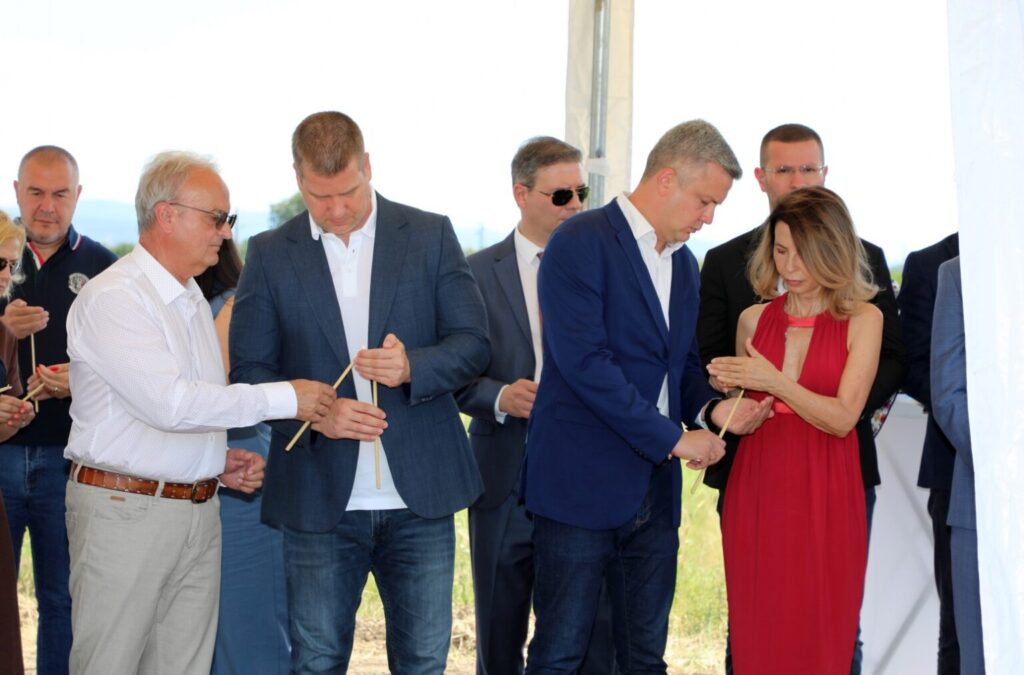
Archive photo: Stara Zagora Municipality
Tsvetelina Borislavova, a major shareholder and chairperson of the Board of Directors of the Bulgarian-American Credit Bank, intends to purchase over 50 decares of pasture land publicly owned by the Municipality of Stara Zagora. The land parcels are located in the territories of the Stara Zagora villages of Hristiyanovo and Elenino. The plots in Elenino, which lies seven kilometers from Stara Zagora, are classified as third-category agricultural land.
Borislavova plans to use these lands for the construction of photovoltaic solar systems.
At an extraordinary meeting of the Stara Zagora Municipal Council held on August 7 this year, councilors agreed that the municipality would take steps to provide land from the municipal land fund that is not subject to restrictive regimes, offering an equivalent exchange in return for releasing the parcels specified by Borislavova from the reimbursement list for owners of agricultural land in the two villages. The councilors also supported initiating a procedure to change the permanent land use classification from “Pasture” to “Abandoned field,” a process to be carried out by the Ministry of Agriculture or its regional office in Stara Zagora.
The proposal was added to the meeting agenda at the last moment by Mayor Zhivko Todorov and therefore could not be discussed in the relevant municipal council committee beforehand. It was based on an official letter from the investment company “CSI F AD,” of which Borislavova is the managing director. The company has a capital of 171.344 million leva and expressed an investment intent to buy the specified properties to invest in the “Elenino” industrial park and its expansion project.
Included as justification for the investment interest was a letter from the Ministry of Energy confirming that the project includes the construction of photovoltaic installations and energy storage systems, which meet the legal definition of an “energy object” according to supplementary provisions of the Energy Act. However, the letter explicitly states that “the Minister of Energy does not have the regulatory authority to recognize specific objects as energy facilities.” It further clarifies that the status of such objects is determined by the competent authorities under the Spatial Development Act, namely the administration responsible for issuing the approvals.
According to public information, the “Industrial Zone Zagore – Elenino” park is being developed under the National Recovery and Resilience Plan. The project has a total value of 17.3 million leva, of which 14 million leva are grant funding from the Ministry of Innovation and Growth.
The investments in the park are expected to exceed 500 million leva, creating more than 1,000 new jobs. The joint-stock company of Tsvetelina Borislavova will implement its “Heros” project within the zone. This project includes the construction of factories for vanadium batteries, recycling old solar panels, and manufacturing solar cells.
The three factories, along with a warehouse for the freight forwarding company “Despred” AD—also owned by the entrepreneur—will occupy an area of 300 decares. At the end of March 2025, Borislavova purchased 206 decares of land in the “Zagore” industrial zone for 6.4 million leva.
A review of the APIS system shows that in June of last year, Tsvetelina Borislavova bought 30 decares of third-category agricultural land from a private individual, along with 1,180 ordinary registered shares with a nominal value of 1,000 leva each. The land parcel is located in the “BOBAKA” area of the Elenino village territory. The lands mentioned in the letter to the mayor of Stara Zagora are in the same area and adjoin the land she purchased.
A week ago, the Ministry of Regional Development and Public Works (MRDPW) announced on its official page that it is providing 463 million leva in grant funding via the Just Transition Fund for the Stara Zagora region. This funding is intended to compensate for job losses resulting from the decline of coal industries. The funds will support initial production investments under EU Regulation No. 651/2014 for enterprises in difficulties and promote renewable energy production. Grant amounts per project will range between 1 and 20 million leva, with a submission deadline of November 22 this year.
Whether Borislavova’s company will apply for grant support from this fund will only be known after the procedure for presenting and selecting project proposals concludes.
In addition to “CSI F,” the industrial park is attracting investment of 240 million leva for the construction of a solar panel and cell factory by “Smart Solar Technologies” AD, owned by Halil Demirdag—a prominent entrepreneur and president of the Turkish Solar Industry Association (GENSED). This plant is part of a priority investment project expected to create over 800 new jobs with support from the Bulgarian government and the European Union.
Rapid response from local authorities and institutions
On July 30, immediately upon receiving Borislavova’s letter, the mayor of Stara Zagora filed a notification with the Regional Inspectorate of Environment and Water (RIEW) in Stara Zagora regarding the requested change in the permanent use of the mentioned properties. Two working days later, on August 4, the environmental inspection replied to Zhivko Todorov that the specified agricultural lands are not within the “Natura 2000” protected areas and therefore a compatibility assessment procedure was not required under the relevant ordinance.
On August 5, the municipal administration prepared the proposal for the municipal council decision, and at the extraordinary council session on August 7, the councilors supported Borislavova’s investment intentions with the legally required 34 votes.
A careful review of the documents attached to the mayor’s proposal reveals that the cadastral sketches of the seven land parcels were all issued by the Agency for Geodesy, Cartography and Cadastre of the Stara Zagora municipality on the same date—July 24 this year.
This strongly suggests that the mayor was likely aware of Borislavova’s investment intentions before she officially declared them, and that the municipal administration hurried to obtain the sketches and other transaction documents.
There is also no clear indication of when the property valuations were commissioned or carried out, as the dates on those documents only specify the month—July 2025—without a specific day.
According to the accompanying reports, the accepted market value of each property is deemed fair, meaning it “provides motivation for both the seller and the buyer to complete the transaction under conditions of sufficient information about the subject of the deal and the existing market conditions for its execution.” Whether the valuation of the properties Borislavova intends to acquire truly reflects market value is a judgment left to the public.
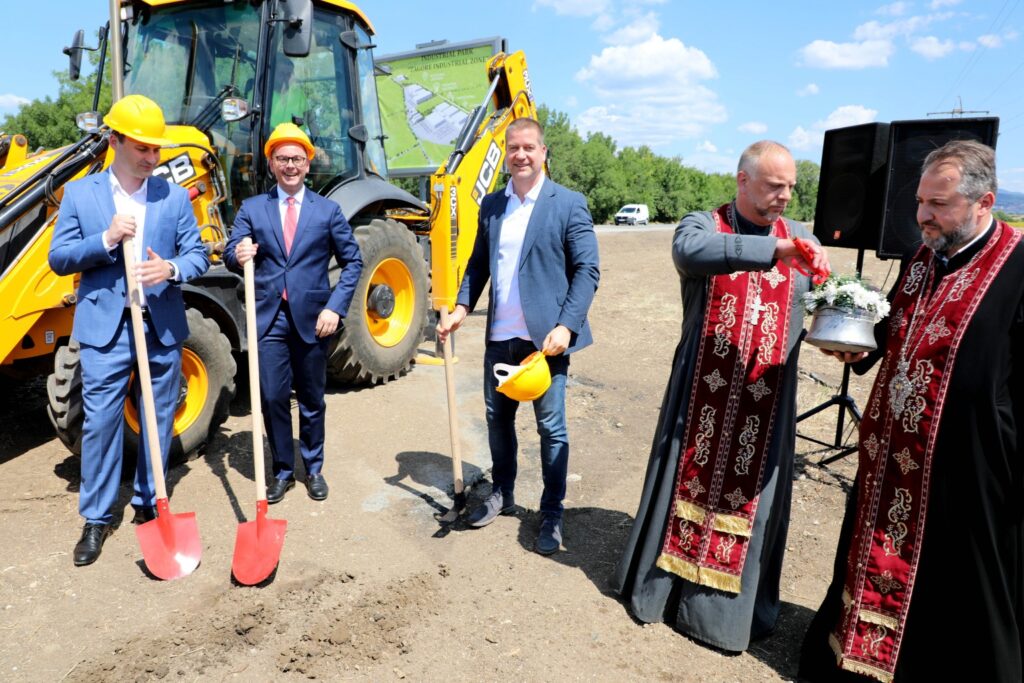
The average price per decare is about 1,550 leva excluding VAT, which will be the starting price in a future auction plus an additional 10 percent step, meaning just under 2,000 leva per decare including VAT. Meanwhile, online listings for third-category agricultural land show prices ranging from 3,000 to over 10,000 leva per decare.
Bulgarian legislation imposes restrictions and special procedures for converting pastures into agricultural land with a different permanent use designation (PUZ). Iva Radeva, former regional governor of Stara Zagora, recalled to “Za Istinata” how the renovation of the Shipka Peak monument was obstructed because the surrounding lands were registered as “pastures” in the land registry.
If the 55 decares that Tsvetelina Borislavova wants to acquire for her business projects are smoothly reclassified from “pastures” to “abandoned fields,” it will significantly facilitate changing their purpose to industrial use—and most likely reduce the fees the investor will have to pay.
“Za Istinata” will continue to monitor the issue. However, the facts revealed so far in the investigation show, yet again, that laws in Bulgaria are applied with double standards toward those with high social status and positions of power.
This demoralizes the public environment and corrupts the relationship between authorities and society. It also discourages citizens from seeking and defending their rights, including through courts and institutions such as the Ombudsman, because, in practice, they often find themselves completely deprived of rights.