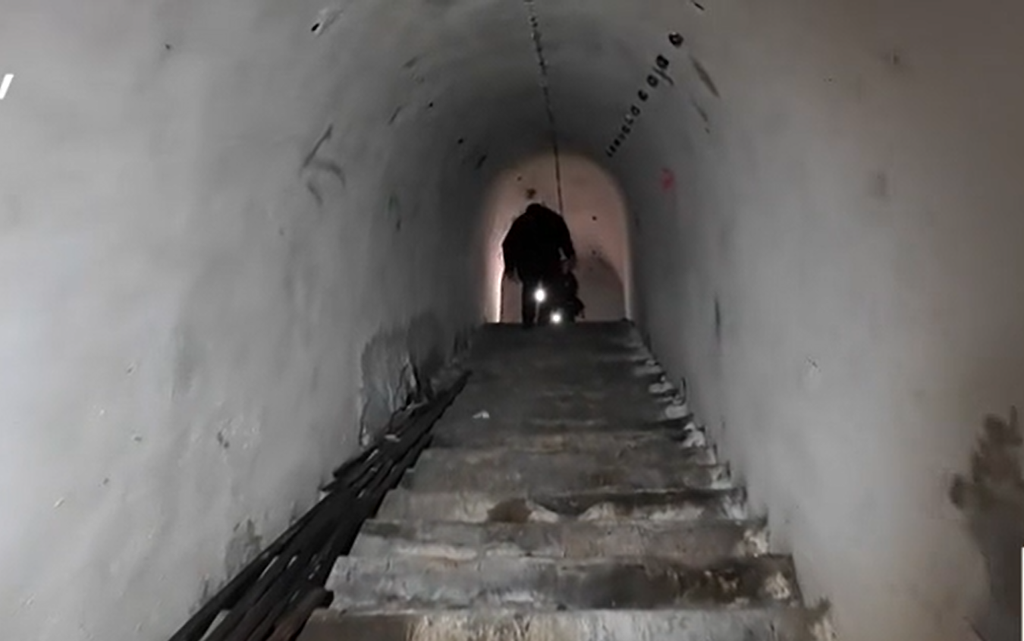
Probably every adult in Bulgaria has wondered at least once over the past four or five years whether adequate bomb shelters are available for the population in the event of an air attack on the country. The issue has become particularly pressing following Russia’s aggression against Ukraine and the expansion of military operations in the Middle East.
“If you want peace, prepare for war”
This ancient philosophical principle remains relevant today. It calls for preventive action by the state, municipalities and businesses to ensure at least a minimum level of protection for the population against missile and bomb attacks.
Bulgaria’s air defence is equipped with outdated, Soviet-made systems. Their coverage is limited to the capital and the country’s largest cities, as well as key industrial facilities such as the Kozloduy Nuclear Power Plant.
Parts of NATO’s integrated air and missile defence infrastructure, including the facility at the Deveselu base in Romania, also provide protection for Bulgarian territory.
Bomb Shelters in Bulgaria: Who Gets a Place First, and What Condition Are They In?
Bomb shelters and radiation-protection shelters are a key element of the national plan for protecting civilians against potential threats. Before 1989, Bulgaria had 551 high-protection shelters. Following the collapse of the Soviet Union and the Warsaw Pact, the country was no longer considered under direct threat of military action on its territory. This largely explains why
during the years of the post-communist transition, many of these facilities were neglected, abandoned or rented out to private companies for commercial use.
As of 2024, according to information provided to the media by the Interior Ministry, only 292 bomb shelters and radiation-protection shelters were considered fit for use. That figure remains unchanged today.
Most of them are classified as Category II facilities, meaning they are in “good” or “satisfactory” condition and can be brought into operation within a short period and with relatively little investment.
Radiation-protection shelters are designed only to protect against radiation and radioactive fallout following an explosion. They do not have airtight ventilation systems, independent power supplies or filters.
Following amendments to the Disaster Protection Act in 2020, Category II collective protection facilities were designated as public property, with access available to the public when sirens sound or alerts are issued through applications. Priority, however, is given to employees working at the facility.
According to the Interior Ministry’s figures, these shelters have a combined capacity of around 200,000 people.
There are only 30 Category I nuclear shelters across the country that can be used immediately in an emergency. They provide full protection against nuclear explosions, radiation, chemical and biological attacks. They are equipped with filtered air systems, independent generators, and reserves of water and food.
Their combined capacity is 11,000 people – enough to accommodate the country’s senior state officials and political elite.
The situation in Stara Zagora Province
The investigative outlet Za Istinata requested information from Stara Zagora Regional Governor Iva Radeva about the condition of bomb shelters in the province. The response was provided by Senior Commissioner Stoyan Kolev, director of the Regional Directorate for Fire Safety and Civil Protection, the authority legally responsible for public safety.
The reality proved even more troubling than anticipated. There are only four facilities in the province considered fit for use.
One is the shelter at the Maritsa East 2 thermal power plant in the village of Kovachevo, in Radnevo Municipality. The other three are collective protection facilities at DZU AD, Biser Oliva and Zagorka AD, all in Stara Zagora.
All four are company-owned facilities. This means their employees have priority in the event of an emergency, although the law also provides for public access. That is, provided there is enough space and people have sufficient time to reach the shelters.
Asked about the condition of these civil defence facilities and whether they have basic infrastructure such as running water and electricity, phone chargers, toilets, first-aid supplies and medicines, dry food and blankets, the regional governor’s response provides no specific answers. Instead, it lists the primary and additional activities required by law to prepare bomb shelters for use.
Nor does it specify when the shelters were last inspected or what the inspections found.
The response cites Article 6 of the Ordinance on the Procedure for the Construction, Maintenance and Use of Collective Protection Facilities (CPF). It requires the directorate’s supervisory authorities to inspect the condition of the premises, mechanical equipment, overall airtightness, maintained temperature and humidity levels, and shelter documentation twice a year.
“The technical condition of collective protection facilities varies and depends on many factors, not least the financial resources of their owners. Some are maintained and are in relatively good condition, while others require major repairs to their structures, installed electrical equipment, facilities and plumbing systems.”
This and similar responses, which make up most of the information provided, give the public no real picture of how the state, municipalities and private businesses are ensuring their protection in the event of a missile or bomb attack on Bulgarian territory.
The answer to another question is equally puzzling: “Do citizens know where the nearest bomb shelter is in the event of an air raid – whether to their home, workplace or school?”
The response directs us to the website of the Directorate General for Fire Safety and Civil Protection (DGFSCP), under the “Registers” section, where an up-to-date list of collective protection facilities fit for use is supposedly published. It also provides a link where this information should also be available.
However, no such up-to-date list appears among the 42 registers – at least not under that name.
The link, meanwhile, leads to a page containing “Rules for Safe Behaviour and Early Warning and Alerting of the Population”, but these relate exclusively to fires.
The rest of the response reveals that collective protection facilities are kept locked and, when necessary, access is granted by a specialised maintenance unit according to a pre-established procedure.
The information provided to Za Istinata about the availability of nuclear shelters in Stara Zagora Province makes no mention whatsoever of Category I facilities, of which there are just 30 in the entire country.
It is hard to imagine that the totalitarian state would have left the party elite and administrative nomenklatura of an entire province without a nuclear shelter. Nor would the current authorities allow such a situation. But it is more than obvious that this information is meant to remain classified.
A sense of abandonment
Beyond the four company-owned shelters listed in the province, there are certainly other facilities that are in a deplorable condition, poorly maintained or completely abandoned. Perhaps that is precisely why they do not appear in the information provided by Senior Commissioner Stoyan Kolev.
Few people expect a missile or bomb to hit their apartment building tomorrow. That is understandable: on a subconscious level, we tend to push such thoughts away. But the state has a duty to ensure our collective protection. Local authorities must also take responsibility for this highly specialised and essential infrastructure, even if the law does not explicitly require them to do so.
After all, as it turns out, Bulgaria has shelters and radiation-protection facilities fit for use for only around 200,000 people nationwide. In Stara Zagora Province, the capacity amounts to just a few thousand. So who gets a place first?
Nuclear shelters, meanwhile, are clearly not intended for ordinary people.
This alone is serious enough reason for the media to keep the issue firmly in the spotlight and for citizens to demand that bomb shelters be made available at least for our children. They should not accept excuses that there is no money to build them when funding can be found for all kinds of other projects, including unnecessary ones that provide opportunities for embezzlement.
In the meantime, all we can do is pray that we never have to hear the sound of air-raid sirens.