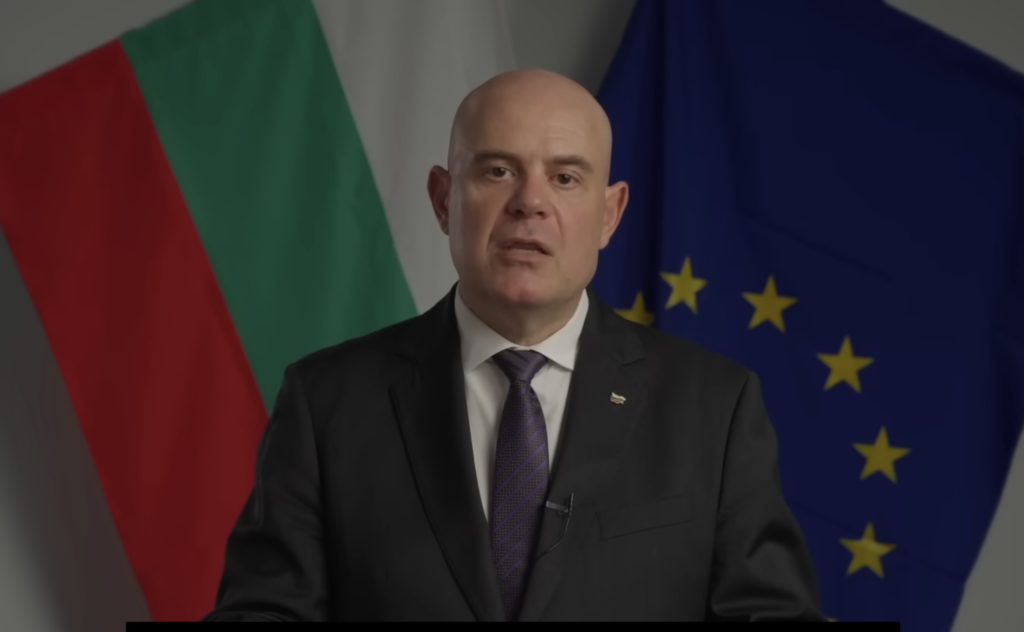
Ivan Geshev was not the problem in our judicial system but rather a collective representation of a corrupt and politically dependent magistrate placed in the highest position in the state to protect a mafia-like authority.
The former chief prosecutor has withdrawn from his profession, as noted in his statement, and he probably regrets not being able to fulfill his dream of becoming Bulgaria’s Falcone.
Instead, he has chosen Vasil Levski as his guiding star in politics, which we expect to shine through some new project in the name of the people.
Whether the realization that he could be a better politician than prosecutor struck him suddenly, perhaps in a dream, or was suggested to him by the deep state’s hidden influences remains an open question.
As if it were insignificant—Ivan Geshev has chosen a new path and will no longer disturb the dreams of the man who placed him at the top of the prosecution. The same individual is now remotely activating members of the prosecutorial college to empower, albeit temporarily, Borislav Sarafov—part of Geshev’s inner circle and his former right-hand man.
Sarafov has only one task until the election of a new chief prosecutor, which is to shield Boyko Borissov from justice, as well as Delian Peevski—the partner with whom they control and manage the judicial system.
After being sacrificed, Ivan Geshev threatened to speak out and provide important details surrounding key and sensitive cases, which, according to him, have been languishing for years, and for which the public has long lost hope of being brought to court. However, Geshev is not foolish and understands what awaits anyone who breaks the code of silence. Thus, he may swear by Levski and his precepts, promising to continue the fight for the truth, but his courage will diminish if he has to confront the mafia directly.
For this reason, it is questionable whether the important revelations regarding high-profile cases are in the files that the former chief prosecutor submitted to the National Assembly along with his request to lift Boyko Borissov’s immunity.
The coalition PP-DB issued a declaration against the appointment of Borislav Sarafov, calling this substitution a farce. Even more sharply and categorically, the stance of the Management Board of the Union of Judges in Bulgaria states that the decision of the Prosecutorial College of the Supreme Judicial Council to appoint the Director of the National Investigation Service as acting “Chief Prosecutor of the Republic of Bulgaria” is deemed “shameful and severely damaging to the authority of the judiciary.”
Pointing to the facts reported in the media, which raise serious doubts about the integrity of Borislav Sarafov, as well as notifications received regarding the initiation of an investigation against him in his capacity as deputy chief prosecutor and director of the NSS, the Union of Judges in Bulgaria calls for the Supreme Judicial Council’s Plenary to hold an extraordinary session to elect a new deputy to Ivan Geshev. Furthermore, the entire composition of the Supreme Judicial Council should immediately resign as morally delegitimized.
In the statement of the Management Board of the Union of Judges in Bulgaria, Borislav Sarafov’s public remark about a “purge of Geshev’s people in the regions” is deemed absolutely unacceptable to the point of absurdity.
The threat to deal with prosecutors close to Ivan Geshev is unlikely to have surprised anyone. However, how Sarafov intended to identify the “Geshevites” when magistrates in the appellate, district, and regional prosecutor’s offices had likely not dared to openly contest the orders or actions of the former chief prosecutor remains unclear. He may have intended to use compliant prosecutors eager to advance their careers, and perhaps mutual surveillance and informants are still present in the Bulgarian prosecutor’s office, which is built on a Soviet model—who knows…
And Sarafov will leave after Geshev. Even the long-awaited judicial reform could happen if the necessary majority is secured and remains unthwarted by the “forces of darkness” that Geshev mentioned in his address to his dear Bulgarian brothers and sisters.
Whether with or without a chief prosecutor, or with one who holds more representative functions, the decision should involve not only the committee established in parliament but the entire magistrate community in the country—constitutionalists, academic professors, judges, prosecutors, investigators, lawyers, and their professional organizations. The same applies to how a future Supreme Judicial Council and Anti-Corruption Commission will be structured.
However, judicial reform cannot be an end in itself; it must ensure the necessary quality of investigations and a fair judicial process for all participants. It should also make, if not impossible, at least very difficult the political pressure and maneuvering within the justice system.
Yet, even the most perfect legislation cannot guarantee how this reform will be implemented in practice. It needs to be accepted within the system and by society as a whole.
But how can we expect magistrates, who yesterday accepted bribes, to wake up tomorrow with new morals and a conscience that has never been shaken out of the rubbish to be turned inside out?
How can trust in a deeply corrupt judiciary, which dates back to the socialist era, be restored?
In other words, a cleansing, as well as a self-cleansing of the system, is required. Besides good laws, there must be willpower and morality.
And there must be a civil society with a low tolerance threshold for corruption. With the current mindset of the Bulgarian people, no judicial reform will yield results.
But let’s not forget that as of today, not only does the reform in the justice sector hinge on this, but the fate of the entire government also depends on whether Borissov and Peevski will remain untouched by judicial prosecution. What a paradox, isn’t it?