



Local elections are always intriguing, and the contest for municipal councils is no less captivating than that for mayors, especially against the backdrop of continuously rising salaries for council members over the years. This dynamic has led to a diverse array of individuals appearing on party and coalition lists—ranging from reputable figures with expert potential to more controversial personalities.
The reason for this is simple: the sieve through which candidates pass is essentially permeable, and there have long been rumors that prime positions are bought—though I hope this isn’t the case for every party list.
In the Stara Zagora municipality, 13 parties, 8 coalitions, and 3 initiative committees have set their sights, efforts, and funds on the mayoral positions and the coveted 51 seats in the municipal council. Among all registered participants, 9 are vying for the mayoral seat, including the parliamentary parties without “Vola,” plus the “Coalition for Democratic Bulgaria,” “Revival,” ABV, the Political Union “Social Democrats,” and the “Alternative for Citizens” coalition.
The Atmosphere in Stara Zagora Days Before the Elections
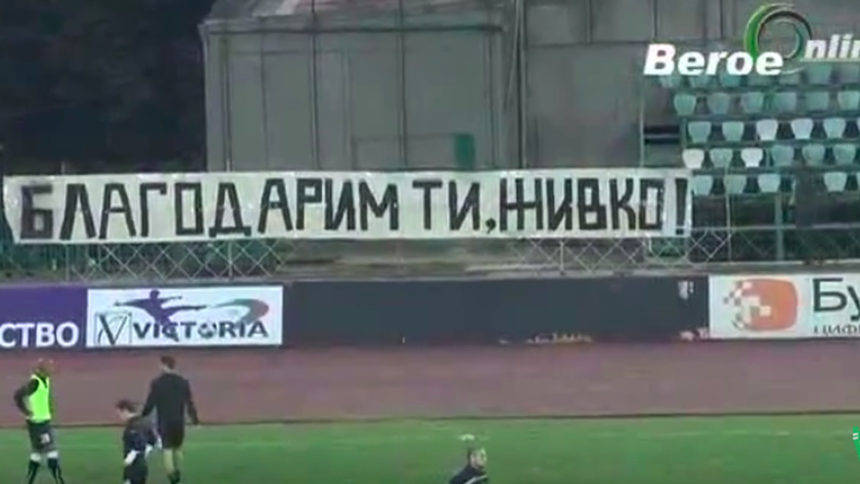
It seems that none of the major sociological agencies have researched the sentiments of the residents of Stara Zagora in the days leading up to the elections. Unlike cities like Sofia, Plovdiv, Ruse, and other smaller towns, the outcome of the mayoral race in Stara Zagora appears to be predetermined. Many people in the city believe this, especially supporters of Zhivko Todorov, who is contending for a third mayoral term.
Perhaps it is precisely the lack of intrigue in the mayoral contest that motivates the parties to focus their resources on winning more seats in the upcoming municipal council. However, even without the assistance of sociology, it can be predicted that GERB will struggle to achieve an absolute majority compared to their mandate from 2015-2019. Therefore, for the future mayor to push through his governance ideas, he will likely need to rely on the votes of the parties that were coalition partners in the “Borisov 3” cabinet, which will be able to secure representation in the new local parliament, as well as those from the opposition, which during this mandate behaved more like partners with the ruling party.
The Impact of Local Political Deals
This will, in practice, mean more deals and less principle in the decisions made, leading to fewer benefits for the citizens.
The classic type of election campaign in Stara Zagora has given way to Facebook campaigns and the use of various groups, where candidates present their ideas for the city’s development and gauge community feedback on the performance of Mayor Todorov’s administration. Over the eight years of his tenure, he has accumulated considerable dissatisfaction due to his non-transparent working style, which fosters a sense of corruption, and the poorly executed and significantly delayed projects funded by the European Union, totaling hundreds of millions of leva. The constantly excavated streets, air pollution, and severe difficulties in transport and citizens’ mobility add to the negative perception of local governance.
Despite spending hundreds of thousands of leva annually from the municipal budget on national and regional media, Zhivko Todorov refuses interviews with journalists who are not “in his corner” and could pose uncomfortable questions.
Assessing Mayor Zhivko Todorov’s Leadership
Otherwise, the GERB mayor, who is also a member of the Executive Committee of GERB, appears dialogical and moderate, and still manages to win the favor of voters who vote irrationally and are uninterested in the issues of the city they inhabit.
Zhivko Todorov highlights high local income, the lack of unemployment, and a favorable investment climate as his successes, alongside the establishment of a new industrial zone and the expansion of the city, which will be outlined in the new General Development Plan, among other achievements. However, apart from the old machinery enterprises like “Preskov,” “Progres,” “Khranmash,” and brands in the light industry such as “Zagorka,” “KEN,” “Biser Oliva,” and “Gradus,” which are reinvesting in their production, there is a notable absence of innovative and high-tech industries. Moreover, direct foreign investments in the municipality for 2017 were only €110 million compared to €672 million in Galabovo, for example.
The assessment of the financial situation of the Stara Zagora municipality is also ambiguous, with accrued liabilities amounting to €13.4 million by the end of September, of which €9.2 million are due for projects financed by the European Union. Interest rates on loans are also increasing. There is a lack of public information on how many cases the Stara Zagora municipality has lost and what costs it has incurred for legal expenses, as all this is part of the evaluation of a local administration’s performance.
Reflections and Challenges Ahead of the Elections
However, these are just some of the problems facing the city and municipality that pose questions for citizens to reflect upon before heading to the polls on October 27.
The elections in the second-largest municipality in the region—Kazanlak—appear equally devoid of intrigue, where the incumbent GERB mayor Galina Stoyanova is seeking the trust of citizens for a third term. Such prolonged governance tends to tire people, raising the question of alternatives. There is no research showing the level of trust garnered by the BSP candidates—Professor Ivan Vyrlyakov in Stara Zagora and Stoyan Petrov in Kazanlak—which makes predictions in any analysis unfounded. The actions of the opposition are also intriguing and raise questions. For example, Ivan Lapchev, as the chairperson of DSB, “joined” forces with VMRO and took the second spot on the party’s list, necessitating Atanas Atanasov to appoint an interim head for the local structure. Meanwhile, the leader of the SDS in Kazanlak, Nikolai Alexandrov, received an unwinnable position on the unified party list with GERB, leading the old SDS members in the city to declare that they will not vote at all.
The Impact of Corporate Votes on Local Politics
More important than these petty party interests is the so-called corporate vote. This vote ensures the reproduction of the so-called “Experts of Kazanlak” in the municipal council. Leading their list, named “The Alternative for Citizens,” is engineer Nikolai Ibushhev—the executive director of the largest military factories in the country, “Arsenal” AD. It is worth recalling that during the week between the first and second rounds of the local elections in 2011, when GERB was vying for its first mayoral term in Kazanlak, the state sold its golden share to the majority owner of “Arsenal,” allowing Galina Stoyanova to win the runoff. Since then, the so-called Experts of Kazanlak have supported the policies and actions of the mayor for two terms, of course for a certain price. The direct involvement of a joint-stock company that produces weapons and ammunition renders the political debate in the city pointless, even laughable, while corrupting the democratic vote by legitimizing corporate interests.
The corporate vote is also strong in the municipality of Galabovo, where Nikolai Tonev has led the municipality for four terms and is now seeking a record fifth term with the support of both the BSP and a local coalition involving the DPS and BDZ (currently known as “Leader”). Opposing Tonev in this election is only Stefan Nikolov, a former municipal councilor from GERB, primarily out of honor for the ruling party. The decisive corporate vote comes from Hristo Kovachki, owner of the controversial company “Brikel,” which poses a constant risk to the health of the municipality’s citizens through its operations. Just in the last week, Galabovo recorded several instances of significant air pollution from sulfur dioxide concentrations two or more times above the permissible hourly limit of 350 µg/m³.
In recent months, various media outlets have revealed that the power plant has been illegally incinerating various waste materials.
Investment Intentions and Local Elections in Pavel Banya
Hristo Kovachki’s investment plans involve turning “Brikel” into a sort of incinerator aimed at burning hundreds of thousands of tons of waste from abroad each year. The media outlet “Za Istinata” uncovered that the municipality of Galabovo has secretly prepared an agreement with Hristo Kovachki to engage in this lucrative trade. Mayor Tonev intends to construct a system for the mechanical treatment of waste and the production of what is known as RDF fuel, of course funded by a loan.
In Pavel Banya, there will also be intrigue in these elections, as in all previous local elections in 2015, because the current mayor Stanimir Radevski is challenged by Isa Besoğlu—a local employer with significant influence in the Muslim community, nominated by the DPS. Osman Pehlivan from the NDPs is also a contender for the ethnic vote, as he participates in the race for the mayoral seat for not the first time. Local political leaders anticipate a runoff again this year, but they are uncertain whether it will again be between Stanimir Radevski and Isa Besoğlu. The current mayor has chosen to run as a candidate for VMRO, thereby losing any chance of gathering votes from the Roma neighborhoods and Muslim villages.
Electoral Manipulations and Candidate Strategies in Pavel Banya
The local administration has disenfranchised 49 voters who do not reside at the registered five addresses in Pavel Banya. Furthermore, the attorney for a businessman owning hotels and restaurants in the resort town is filing complaints with the Administrative Court in Stara Zagora, claiming that these individuals have been deprived of their voting rights. In the previous elections in 2015, despite numerous reports of electoral violations and vote buying, Isa Besoğlu lost to Radevski in the runoff by fewer than 40 votes. This time, he was prepared in the first round to give the mayor 700 of his votes so that he could face Radevski instead of Ivan Mihailov, the BSP candidate. According to him, Radevski was a more convenient opponent.
An increasing number of candidates in the elections are opting not to waste money on advertising posters, banners, and billboards. It is much more advantageous for them to utilize vote buying schemes. It turns out that securing preferential votes is significantly cheaper than running with an independent list for municipal councilors, as noted by participants in the race. A case in point is Yusni Ibryam, who entered the Municipal Council in the 2015 local elections with the Reformist Bloc from the quota of NPSD under Korman Ismailov. He was in the 26th position on the list but managed to secure preferential votes—not from the Roma neighborhoods and areas of the municipality but from voters in the central sections of Stara Zagora.
There was considerable unrest around Ibryam in the Reformist Bloc due to his conviction for vote buying in the parliamentary elections for the DPS, when the list leader was Delyan Peevski. Later, he left the Reformist group and became independent. Now he is second on the DPS list, and it would not be surprising for the movement to elect three municipal councilors in a municipality where Ahmed Dogan’s party has traditionally not had support.
Concluding Thoughts on the Campaign in the Stara Zagora Region
Thus, the campaign in the Stara Zagora region concludes without notable intrigue or expectations. Whether the ruling party will manage to maintain its influence here depends on many factors, primarily on whether the accumulated discontent with the “Borisov 3” cabinet and its coalition partners transforms into a punitive vote against GERB.
This does not seem very likely, as there is no new political project on the horizon that can rally hopes and expectations. However, it is not entirely excluded either. The outcome of these elections will reflect the sentiment of the electorate and their responses to the current political landscape, making it a pivotal moment for local governance and political dynamics in the region.





