



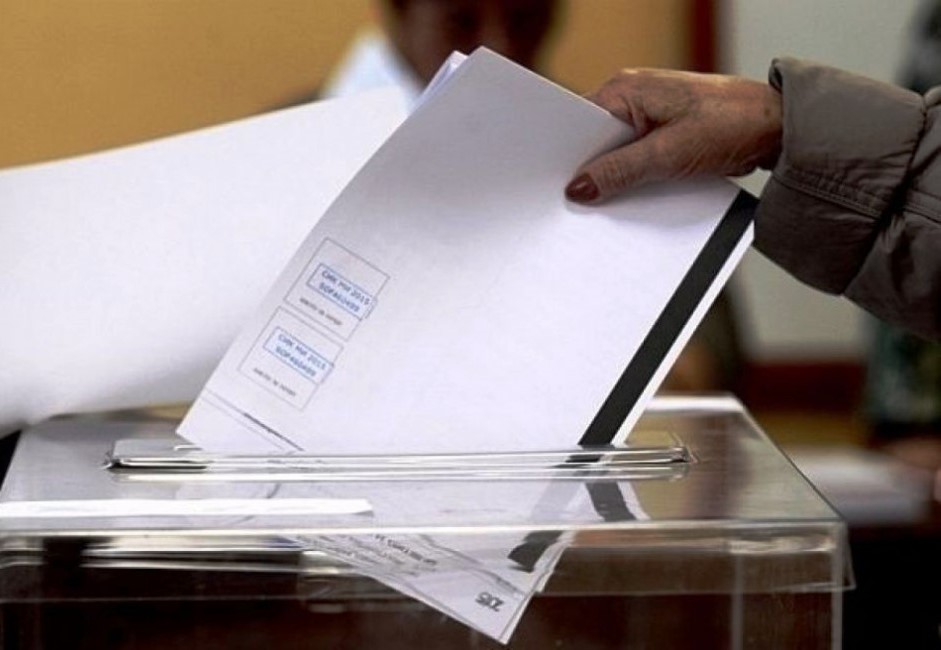
Less than 40 percent of voters in the Stara Zagora region cast their ballots on April 2, and the campaign as well as the election results appeared predetermined. The pre-election campaign for the two main political forces in Stara Zagora and the southern municipalities, such as Radnevo, Opan, and Galabovo, was dominated by discussions regarding the future of the Maritsa East energy complex.
The Recovery Plan, particularly its provisions for the power plants in the complex, became a hot potato tossed back and forth between competitors vying for the top spot in the elections.
GERB criticized Kiril Petkov’s government for allegedly betraying national interests within the Recovery Plan by implementing a rapid reduction of carbon quotas. However, there were no proposals from them on how the state-owned Maritsa East 2 power plant could continue operating amidst decreasing electricity prices and the continuous rise in carbon emission costs, which surpassed 100 euros per ton this winter. There was also a lack of clash of ideas regarding what industries could replace the coal-generated electricity.
In the northern municipalities of the region, the campaign unfolded without significant highlights. Only in Pavel Banya and Kazanlak did it coincide with public sentiments and protests against one of the major investors, Kastamonu Bulgaria AD, and its intentions to expand chemical production in the plant located in the village of Gorno Sahране. Additionally, local authorities in Kazanlak engaged in populist moves by purchasing and installing three devices to measure air quality, which, it was later revealed, had not been calibrated by a licensed laboratory, meaning their data were not representative.
This election cycle illustrates the pressing issues surrounding energy policy and environmental concerns, alongside the predictability of the electoral outcomes, raising questions about the direction of local governance and accountability in addressing significant public issues.
Lack of Memorable Messaging in the Campaign: Electoral Strategies and Allegations of Vote Buying
The electoral campaign was characterized by a notable absence of memorable messages, with political parties increasingly opting to convey their platforms through television outlets that grant them access to a broad audience. Meetings with tighter formats aimed at their core supporters appeared to have little impact. Amongst the leaders’ tours across the country, the visits of Boyko Borissov and Slavi Trifonov to Stara Zagora garnered considerable attention, as they recounted their narratives about the current state of Bulgaria and attributed blame for the repeated elections over the past two years.
While vote buying is a criminal offense, this reality does not deter parties from securing votes through monetary incentives, particularly in Roma ghettos. Gathering direct evidence of such illicit practices is not an easy task. Even when such evidence is available, the prosecution often either delays investigations into individuals in power or dismisses cases entirely, as seen when key witnesses retract their testimonies.
This situation raises serious concerns about the integrity of the electoral process in Bulgaria and highlights the systemic failures within law enforcement and judicial systems to address electoral malpractice effectively. The reliance on television campaigns over genuine engagement with voters reflects a broader trend in political communication, which may not foster true accountability or transparency in governance.
Election Allegations and Voting Trends: DPM’s Response to Vote Buying Claims
In an interview with Radio Stara Zagora on April 3, Halil Letifov, deputy chairman of the Movement for Rights and Freedoms (DPS) and leader of the party’s list in Stara Zagora, deemed the Interior Minister’s assertions that DPS is involved in vote buying on election day as “unacceptable.” However, mass voting patterns in certain municipalities and polling stations support the claims made by Ivan Demerdzhiev.
Such voting dynamics are evident in the Roma neighborhoods of Muglizh, Nikolaevo, and Gurkovo. Residents of Gurkovo report that those distributing money have become increasingly brazen, despite heightened police activity in the days leading up to and during the elections. Compared to the previous elections in October of last year, DPS reportedly increased its tally by approximately 1,000 votes, which is a significant achievement for a region with a minimal native Muslim population. This result reinforces a long-standing trend of the “Roma-ization” of the DPS vote.
Voting Dynamics in Pavel Banya and the Results of the Recent Elections in Stara Zagora
In the municipality of Pavel Banya, where Isa Besoolu serves as mayor, the vote for the Movement for Rights and Freedoms (DPS) is driven not only by ethnic factors but also by fear. Sources familiar with the electoral schemes indicated to “For the Truth” that purchased votes account for no more than 20 percent.
Results of Other Election Participants
GERB, firmly established within the local power structures of the region, achieved a result of 26.30 percent—a performance that may not seem particularly impressive for the party’s mayors in major and key cities like Stara Zagora, Kazanlak, and Radnevo. This outcome could even appear unsatisfactory in the eyes of leader Boyko Borissov. Nevertheless, support for the party has remained stable compared to last year’s elections, even in absolute terms. This consistency is likely tied to the prior threats from their main opponents to oust them from power, a message GERB continuously communicates to local government employees who rely on their votes to secure their jobs. It’s important to note that many appointments in state-owned enterprises, such as “Mini Maritsa East” and TPP “Maritsa East 2,” occur with the approval of local GERB structures and mayors.
The coalition “Prodaljavame promjanata – Democratic Bulgaria” managed to withstand the aggressive campaign from their primary opponent. However, the parties within the coalition failed to expose the poor and corrupt practices stemming from GERB’s twelve years of governance in the region. They were unable to turn the negative sentiment from citizens regarding the ongoing construction and repair works of the water supply system, the damaged roads, and air pollution to their advantage. Many candidates from the coalition likely remained unrecognizable to voters in the region, and the internal coalition tensions between the two parties, even if they did not directly harm the electoral outcome, did not enhance the campaign’s energy or positive messaging.
The party “Vazrajdane” achieved one of the highest results in the country in the Stara Zagora region, garnering 17.33 percent and increasing its result from October 2022 by nearly 5 percent. At this stage, it is difficult to outline a profile of the voters for this rising extremist party. However, it is clear that their support is not merely a collection of marginalized individuals, Russian sympathizers, or opponents of the Euro and NATO membership. Simplifying their voter base carries risks. Kostadinov does not merely claim the nationalist vote in the country; he was the only candidate in the campaign to present direct and unequivocal messages—things that a significant portion of the population wants to hear, regardless of their feasibility.
These results and dynamics illustrate the complexities of the electoral landscape in Stara Zagora and the broader implications for political engagement in the region.
BSP’s Performance and Shifting Voting Trends in Stara Zagora
The Bulgarian Socialist Party (BSP) achieved a higher result in the Stara Zagora region than at the national level, garnering 10.77 percent of the vote. However, the evident decline in trust towards the century-old party remains a persistent trend. Parties like “The Left,” “Bulgarian Rise,” and “Revival” have siphoned off parts of the left vote, leaving the BSP with only its core electorate.
“Ima takuv narod” (ITN) collected the populist vote and sends the entertainer and his scriptwriters back to the National Assembly for the second time, despite being ousted by the electorate in previous elections. In the region, ITN received the second-highest number of votes in the country, following Pleven. Slavi Trifonov leads two lists, but his party did not clear the 4 percent threshold in Blagoevgrad, leaving him to serve as a representative from Stara Zagora, provided the parliamentary bench isn’t too narrow for him. Alternatively, he might choose to appear in the National Assembly in a manner akin to Ahmed Dogan.
According to members of the Regional Electoral Commission and polling station committees, as well as local authorities, the parallel voting process using machines and paper not only complicated the electoral process and result reporting but also created a perception of vote distortion. Most concerning is the fact that 60 percent of Bulgarians chose once again to abstain from voting. Their reluctance to participate in the political process signals a lack of trust in party elites and a desire not to empower them. The reasons for this disillusionment should have long been understood by the parties involved. Otherwise, the results of elections will increasingly become less representative, while purchased and controlled votes will overshadow free ones, jeopardizing the foundations of democracy—or what remains of it.
This unfolding scenario underscores the urgency for political reform and a genuine engagement strategy to restore public trust in the electoral process and party systems. Without addressing these issues, the political landscape in Bulgaria risks further fragmentation and instability.





