



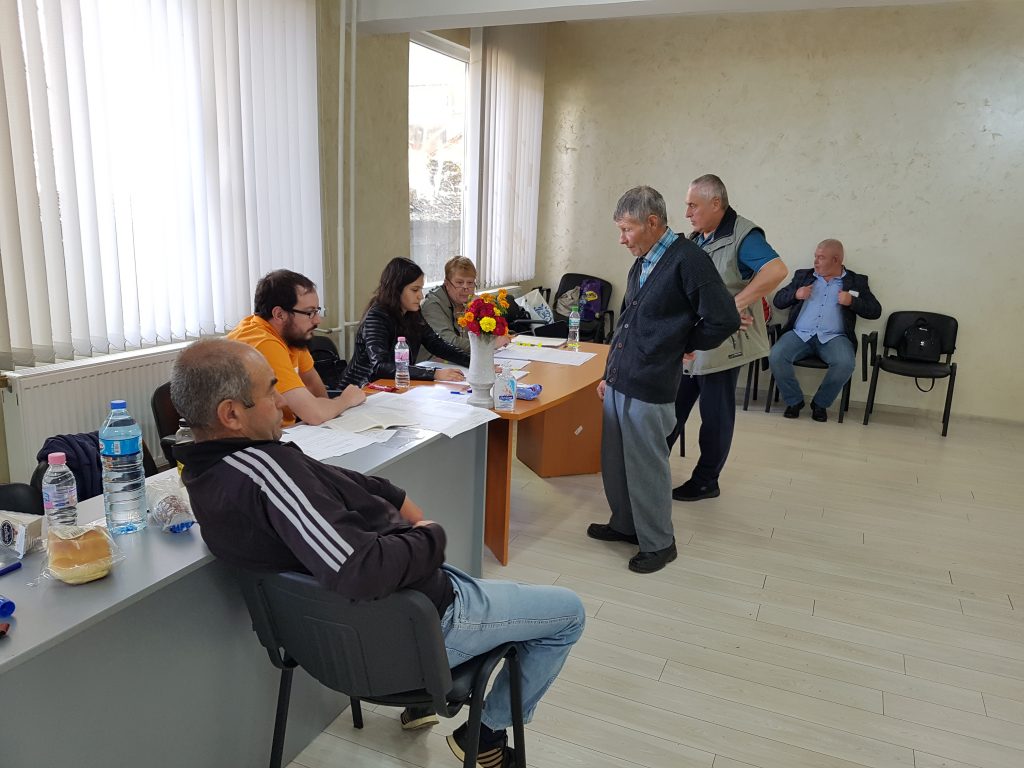
DPS and GERB have retained their positions in the Shumen region, where they have been the two leading political forces. The parties of Ahmed Dogan and Boyko Borisov not only solidified their standing but also expanded their influence in Shumen and the surrounding areas. The only exception is Hitrino, where the winners frequently change, and this time PP leads.
In the recent early parliamentary elections, GERB won in 5 out of the 10 municipalities in the Shumen region. DPS again took its “four municipalities,” but with an even more convincing result, reminiscent of “By-Toshov-style electoral victories.”
Both parties increased their vote counts significantly, rather than symbolically.
However, the party of Kostadin Kostadinov, “Vazrazhdane,” recorded the largest growth, achieving double the result of the previous elections and is now practically breathing down the neck of the BSP.
PP found itself on the losing side this time. The formation of former Prime Minister Kiril Petkov lost nearly 14% of its votes in Shumen, despite running an active campaign and having its candidates viewed as winners until the very end.
The biggest loser, however, is ITN. Slavi Trifonov’s party literally collapsed and lost two-thirds of its votes.
DPS Achieves Record Support in Vurbitsa, Solidifying Its Influence
The record for DPS is in the municipality of Vurbitsa, a traditional stronghold of the movement, where Merdin Bayram has been in power for a third term and the party achieves impressive results that leave no doubt about its total influence in the municipality.
On October 2, DPS won a staggering 85.12% of the votes in Vurbitsa, a result unmatched by any other party. A total of 3,489 out of 4,102 voters exercised their right to vote for the formation led by honorary chairman Ahmed Dogan and Mayor Bayram. The second party, GERB, is light-years away from the winner, receiving only 250 votes. A few other formations have “scattered” votes in Vurbitsa, but they all received negligible numbers of ballots.
The second strongest result for DPS in the Shumen region is in the municipality of Kaolinovo, where the party garnered 77% of the votes. Out of 5,488 participants in the elections (a voter turnout of 32.4%), 4,235 voters supported DPS. Here, GERB again ranks as the second political force with 13.05%, totaling 716 votes. Ilter Beyzatoff, the second candidate on the GERB list, achieved record preferential votes—458 of all ballots cast for the party were for him majoritarily.
A similar situation exists in another traditional stronghold of DPS—Venez. Here, the movement registered a decisive result, capturing 65% of the votes. A total of 2,239 voters supported DPS out of 3,439 who participated in the vote.
GERB holds second place with 826 votes, or 24.04%. Ilter Beyzatoff, the second candidate on the list, who is from Venez, traditionally receives the most preferential votes in his own municipality—an impressive 521.
DPS is the leading political force in the municipality of Novi Pazar as well, with a significantly more modest 27% or 1,314 votes.
On October 2, DPS emphatically proved that it maintains full control over the municipalities in Deliormana and the southern municipality of Vurbitsa. At this stage, no other party has managed to break the movement’s monopoly, even though the municipalities of DPS are not among the wealthiest and most prosperous in the region.
GERB Holds the Cities
In this election, the GERB-SDS coalition is in second place in the Shumen region. On October 2, GERB received 23.75% and 13,770 votes in the area. The party increased its vote count by 881 compared to the previous elections.
Like DPS, GERB participated in the elections with the same leaders, with former Minister of Education Krasimir Velchev at the helm, followed by Ilter Beyzatoff. Although GERB had only one deputy from Shumen in the last parliaments, it was invariably Ilter Beyzatoff, as the leader would relinquish the spot by choosing to enter parliament from another region.
This scheme is likely to repeat in the 48th parliament, and Beyzatoff has again secured a record number of preferential votes. He received preferential votes from a total of 2,605 voters, primarily from Deliormana, ensuring that no one can displace him from second place. However, this is far from his personal record set in the April 2021 elections, when Beyzatoff garnered nearly 7,000 preferential votes.
While DPS dominates the rural municipalities in Deliormana, GERB holds sway in the cities. Borisov’s party wins in the municipalities of Shumen, Veliki Preslav, Kaspichan, Smyadovo, and Nikola Kozlevo.
GERB also boasts its “star achievements” in municipalities controlled by loyal mayors. In Nikola Kozlevo, where Eshref Redjeb has been in power for a second term, Borisov’s party won a remarkable 60% of the votes. The fact that Mayor Redjeb was implicated by the anti-corruption commission in a conflict of interest evidently did not affect local voters, who continue to vote faithfully for GERB and their mayor. As in previous elections, most of the votes were preferential for the second candidate on the list, Ilter Beyzatoff, who received 923 preferential votes out of a total of 1,503 ballots for GERB.
The Losers
The big losers are ITN which received only 2.93% and 1,701 votes in the Shumen region on October 2. In November 2021, Slavi Trifonov’s party had a substantial 4,859 votes, but in less than a year, its voter base has shrunk.
Another loser from Shumen is PP. The political project of Kiril Petkov and Asen Vasilev came in third in the region with 16.69% and 9,680 votes, and will certainly secure one deputy from Shumen again. However, the party loses 1,566 votes compared to the previous elections, despite the active campaign of its candidates and the huge efforts made by the last candidate on the list, former regional governor Vladimir Yolov, to secure a second mandate from the region. Yolov was quite problematic for the coalition government under Kiril Petkov, as he did not gain access to classified information due to an old conviction for driving under the influence. As a result, three of the parties in the coalition requested his resignation several times, but Petkov never dismissed him. In this campaign, Yolov played a particularly active role, almost as a shadow party leader. Whether his involvement in the list deterred voters from PP or if the decline is part of a national trend is a question for further analysis.
BSP for Bulgaria Suffer Minimal Damage in Recent Elections
The coalition BSP for Bulgaria sustained minimal damage in the recent elections, losing only about 160 votes; however, their result has been on the threshold for a mandate since the previous elections. The BSP is once again in fourth place in the region with 9.32% and 5,404 votes and is likely to secure a mandate, as it has the largest residual votes.
Rising to fifth place in Shumen is “Vazrazhdane,” which achieved 7.88% with 4,571 votes. The party has doubled its result from November, when it had 3.70% and 2,114 votes. According to observers, the party has attracted votes from “I Have Such a People,” “We Continue the Change,” and slightly from the BSP.
In sixth place is the new formation “Bulgarian Rise” with 3.02% and 1,749 votes, followed by “I Have Such a People.”
The coalition “Democratic Bulgaria” ranks eighth in the region with 2.86% and 1,660 votes. The formation has slightly increased its support compared to the previous elections when it received 1,500 votes.
The “None of the Above” option was chosen by 1,651 voters in the Shumen region.
The remaining political formations received less than one percent of the votes.
Voter turnout in the region was 31.78%, slightly higher than in November, when it was 31%.
It remains unclear how the six parliamentary mandates from Shumen will be distributed. Most likely, DPS and GERB will each secure two mandates, while “We Continue the Change” and BSP will each obtain one. However, there is a possibility that GERB’s second mandate may go to “Vazrazhdane.”





