The recent local elections in Stara Zagora demonstrated a decline in interest in participation. Voter turnout in the municipality fell by another 3.6 percent compared to previous elections, making the vote for mayor and municipal council increasingly unrepresentative.
The reasons for the voter exodus are not few, but the most significant one is the demotivation of citizens who are increasingly skeptical that their vote is decisive for the future of their municipality.
Apathy is also fueled by the growing mistrust of the public towards political parties and their representatives in local government, who are expected to address issues—such as infrastructure, social, educational, cultural challenges, etc.—rather than personally benefit from their positions in the administration or municipal council.
The sense of enormous corruption, though unproven and not sanctioned by the courts, is also an important factor in people’s unwillingness to vote. Particularly demotivating is the growing trend over the years to buy votes instead of conducting proper campaigns. The fact that even when the media or police uncover such schemes, the participants remain unpunished adds to this issue.
As a result, people perceive the phrase “Buying and selling votes is a crime” as a mockery by politicians of the principles of democracy and their civil rights.
However, these reasons for not participating in the vote are not specific only to the municipality.
The decline in interest in participating in the electoral process among the residents of Stara Zagora is also related to the fact that, despite great disappointment with the 12-year rule of GERB in the municipality, the opposition parties did not propose alternative candidates to the incumbent mayor, who remains in office for another term. They certainly failed to capitalize on the accumulated discontent and fatigue of citizens from the ongoing year-long renovation of the water supply network, the terrible state of infrastructure, and the air and cleanliness in the city.
This left people with the feeling (not without justification) that these elections were essentially a gift to Zhivko Todorov and GERB.
Because how else can we explain the fact that the parties did not find new faces but instead nominated candidates who had previously lost elections against him, such as those from PP-DB, “Revival,” and BSP? The candidate from PP-DB, Dimitar Chorbajiev, was even labeled “loser” by some voters, however offensive this street slang term may sound. It was therefore quite natural for Zhivko Todorov to appear unbeatable against this backdrop of “rivalry” in a majoritarian election like the local ones. His victory, of course, is linked to his and GERB’s twelve-year administration of the municipality and the dependence of many people on employment, business interests, and other connections.
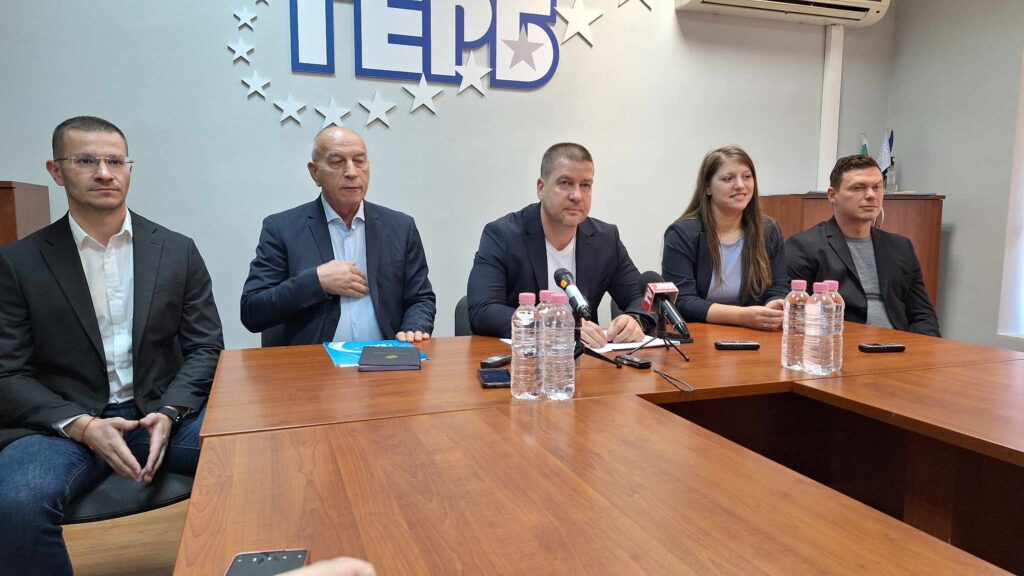
At his first press conference after the announcement of the final election results, Todorov responded to our question about how he explains the fact that 107,000 people did not support him, preferring another candidate or choosing not to vote at all, stating that he is not thrilled with his result.
Thus, there is much work to be done during the new term to regain the people’s trust. The performances of the other participants in the mayoral race in Stara Zagora cannot be described as respectable, particularly for the parties that put them forward. This is especially true for Dimitar Chorbajiev, the candidate from PP-DB, who finished fifth in the rankings, even behind ITN and after Ivan Vurlyakov from BSP, whose result was half a percentage point higher.
The ruling coalition in the municipal council remains not only behind GERB but also sees PP-DB with its 7.3% trailing behind the Agricultural People’s Union (10.9%), “Vazrajdane” with 8.6%, and BSP with 7.5%. Unlike the previous term, in which only “Democratic Bulgaria – Union” had three municipal councilors, now they will have four.
DPS did not have its own mayoral candidate this time, as it has no electoral presence in the municipality. However, in the local parliament, the party of Delian Peevski and Ahmed Dogan won three mandates—one more than in the previous elections. This, of course, cannot be explained by a rise in trust towards the party in the municipality, but results from the Roma polling stations in the Stara Zagora district of “Lozenets” may clarify the picture.
Some, including Zhivko Todorov, describe the new municipal council as overly fragmented, but the previous council was even more so, with representatives from 12 parties and coalitions, compared to 11 in the current one.
To secure a stable majority in the municipal council, GERB will rely on support from the “Future for the Homeland” group—a new party that gained notoriety more for the scandalous audio recording regarding vote-buying than for its campaign in the electoral district. This group will have 4 seats in the new council, the same as PP-DB and BSP, and one seat fewer than “Vazrajdane”—the only party that has seen its support grow in these elections, from one seat previously to five in the new municipal council. The “Left” group, with its three councilors, including the two union leaders from KNSB in “Mini Maritsa East” and TPP “Maritsa East 2,” is likely to be the second pillar of support for Zhivko Todorov and GERB in the local parliament.
DPS also seems to be part of this majority, and it is not excluded that the PP-DB group may support some proposals from the GERB administration, especially if the government manages to stay afloat and is not undermined by Borisov after the final results from the local vote are announced. He indicated this by calling on GERB supporters to back Vanya Grigorova—the unified left’s candidate—in the runoff for the capital. It will be important to see what position the second-largest group in the municipal council, the Agricultural People’s Union, chooses—whether to be part of the majority or to align more with the consensual opposition (BSP and BSDP).