



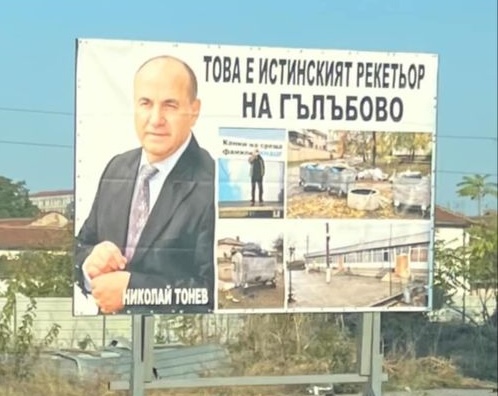
An investigation by the international network ‘Gallup’ reveals that Bulgaria ranks last in the world for trust in the integrity of elections. After October 27, citizens’ feelings of distrust are expected to deepen if the rise of bought, controlled, and corporate votes is not curbed. Unfortunately, the recent parliamentary elections demonstrated a contrary trend, but the authorities appear indifferent. Even caretaker Prime Minister Dimitar Glavchev stated that the government did everything possible to ensure fair elections, yet they once again fell short.
For years, we have been discussing the need to introduce mandatory active registration for elections, as the voter lists prepared by the Main Directorate ‘Civil Administration and Administrative Services’, on which voter turnout is based, are outdated. According to the Directorate, the number of voters in Bulgaria exceeds 6.6 million. However, data from the National Statistical Institute (NSI) reveals that, following the last census in 2023, the total population of the country stands at 6.445 million, of which nearly 1.3 million are in the age group under 19 years. If active registration is accepted as a mandatory condition for voting, it will reflect the actual number of citizens with voting rights, which will, in turn, boost voter turnout. Consequently, the turnout on Sunday would not have been 36 percent, as reported by the Central Election Commission, but nearly 50 percent.
But then the results for the parties would change, which is not in their interest, which is why they pretend to be indifferent, while the law upholds the lie.
The votes for the political parties participating in the elections determine the configuration of the National Assembly, the winner, and the number of deputies in each parliamentary group. Everywhere in the world, during elections, laws, rules, and citizens’ rights are violated. In Bulgaria, since elections began, sacrifices, meatballs, and bribes have been part of the electoral campaign. But manipulation is also a factor. However, over the last decade, the weight of bought, controlled, and corporate votes has increased. Sociologists and analysts anticipated that in these elections, such votes would range between 50,000 and 100,000. This subject became central during the campaign, especially after the split in the Movement for Rights and Freedoms (DPS).
How did we get here?
About ten years ago, following the assassination attempt against Ahmed Dogan by Oktay Enimehmedov, the honorary chairman of DPS withdrew from active political life and became (voluntarily or not) a ‘prisoner’ in a golden cage, while election campaigns began to be organized by Delian Peevski—as a business venture.
The deputy on the ‘Magnitsky’ list, raised and fostered by the shadowy elite, gradually began to transform the party into a corporation. Dogan voluntarily ceded the right to organize the network of companies, distribute state funding shares, and buy influence across all powers and levels.
Since then, vote buying, especially in sections with a predominantly Roma population, has become a practice. Over the heads of these individuals, the threat of demolishing their illegal homes regularly looms before elections, particularly in municipalities where the mayors belong to DPS. The state does not want to resolve this issue once and for all, because it is evidently convenient for the parties to manipulate and exploit these votes.
Even after the rift between Ahmed Dogan and Delian Peevski, which is not the biblical rift between father and son, and especially following the theft of the DPS brand by the Bulgarian co-chair of the party, it became clear that the battle for the ethnic vote would be fierce. It was also evident that this battle would not be a contest of ideas for the country’s future, particularly for the Bulgarian Turks and Muslims, whom the ethnical party established by the ideologues of the Bulgarian Communist Party (BCP) and with the active role of the State Security (DS) has represented politically for more than 30 years.
This was and will continue to be a battle with below-the-belt blows, threats, extortion, and promises. And with a lot of money.
“For the first time, sums between 500 and 1000 BGN per vote are being mentioned, which may tempt many voters, especially those living in misery. The protocols from the sectional electoral commissions show that in some sections in municipalities like Pavel Banya, Galabovo, or Kazanlak, votes for ‘DPS – The New Beginning’ exceed 70 percent of the total vote, while in others, votes are mainly distributed between Peevski’s party and Borisov’s party, because ‘we are together,’ as one of the feudal mayors in the area expressed during a pre-election event. Meanwhile, Ahmed Dogan’s ‘Alliance for Rights and Freedoms’ received only 1.95 percent of the vote, or just over 2000 votes in one of the oligarch’s regions from the ‘Magnitsky’ list.
But does this mean that everyone who voted for ‘DPS – The New Beginning’ loves Delian Peevski?”
No, of course not. People in big cities will find it hard to understand what life is like in a feudal municipality, no matter how many reports they see on television. When not only the entire administrative power but also the business is in the hands of the mayor or is entirely dependent on him, as in Galabovo or Pavel Banya, can people freely choose whom to vote for—by conscience and conviction? They can, but very few have that courage.
Because everything in such a municipality depends on the whims of the mayor.
And if he feels disrupted, as happened in the recent local elections with Nikolai Tonev—the mayor of Galabovo—when 237 residents of the village of Glavan dared to vote for his opponent, he stopped garbage collection and street lighting, froze road repairs with removed asphalt sections, locked the doors of social clubs and ritual halls, and the social life of the people literally came to a halt, especially after sunset. Following the parliamentary elections on June 9 of this year, in which Nikolai Tonev participated as a candidate for deputy in the DPS list and received just 80 votes in Glavan, he also closed the kindergarten in the village by decision of the municipal council.
He carried out these actions with the sincere belief that the residents of this village should be punished for their disobedience, just as disobedient children are punished.
However, to the media and institutions, Nikolai Tonev presents his actions as measures caused by a lack of funds in the municipal budget. On May 20 of this year, the Bulgarian Helsinki Committee reported his illegal actions to Borislav Sarafov—the acting chief prosecutor, Plamen Tonchev—chairman of the State Agency for National Security, the Minister of Interior Kalin Stoyanov, and Kameliya Neykova—chairman of the Central Election Commission. In the report, in addition to the case of the ‘punished’ village of Glavan, the situation in the ‘Vetrin People’s Republic’ is also highlighted.
Before “Za istinata” (‘For the Truth’), lawyer Adela Kachauanova—co-chair of the Bulgarian Helsinki Committee and author of the report on violations related to the free exercise of political rights of residents in these two localities—stated that they had not found individuals willing to sign as complainants because everyone is afraid.
The report was sent to the District Prosecutor’s Office in Stara Zagora, which responded that it had been forwarded to the Regional Prosecutor’s Office, where it evidently remained inactive. Attorney Kachauanova also shared that in his concept for chief prosecutor (regarding judicial reform), Borislav Sarafov proposes that refusals to initiate pre-trial proceedings should not require justification, as they are primarily based on unfounded reports from citizens and non-governmental organizations.
‘How is it that some citizens and NGOs dare to write to the chief prosecutor?’ Sarafov exclaimed, stating that this generated internal agency folklore.
After the elections on Sunday, in which 1,904 voters from the municipality of Galabovo supported the list of ‘DPS – The New Time,’ where Nikolai Tonev is second after the leader Khalil Letifov, suddenly the street lamps in Glavan lit up, brand new garbage bins appeared, and the mayor promised to reopen the kindergarten in the village. It remains unclear how the mayor found the funds, given that the lack of money in the municipal budget was his main excuse for his actions and inactions.
As an admonition, after a protest in front of the municipal building, the mayor initiated lawsuits against those who called him a mafia boss and a liar. One of the defendants is a pensioner, and yesterday the trial against her began in the court in Harmanli.
After 20 years of governance by Nikolai Tonev, Galabovo looks like it has been hit by hail, the roads in the municipality are in a deplorable state, and the chimneys of ‘Brikel’ emit black soot, but for the people there, even ‘a hundred sticks are not enough.’
Thus, the mayor plans to construct a power plant using RDF fuel, for which a mixed company ‘Sistek Invest’ LLC has already been established between the municipality and a private investor from Germany. Peevski has promised support. On July 15 of this year, ‘For the Truth’ requested the documents for this project under the Access to Public Information Act and, following a silent refusal to receive them, filed a claim in the Administrative Court in Stara Zagora against the mayor.
*Nikolai Tonev was elected as a deputy from the Stara Zagora list of ‘DPS – The New Time,’ but he declined the position in a statement submitted to the Central Election Commission, just as he did in 2021 when he could have become a national representative from DPS with 1,939 preferential votes.





