The Municipality of Sevlievo has 27 community centers. One is in the town, and the others are in the villages of the municipality. For their activities in 2024, 1.2 million BGN will be spent. However, there is no control over the expenditure of these funds. Not due to a lack of desire, but because this is stipulated in Bulgarian legislation.
Community centers in Bulgaria are required to present an activity report that includes a financial section to the relevant Municipal Council, and the local municipality allocates their annual subsidy. This is done according to a formula in which the number of paid employees at the respective community center is significant.
When the state transfers the subsidy, the municipality simply has to redirect it to the bank accounts of the community centers. At the end of the year, the Municipal Council is informed about how the money has been spent. Municipal councilors have no say in how millions are spent on community center activities, especially when there is little to no actual activity. A review by “Za Istinata” in the municipality of Sevlievo revealed that less than 8% of the funds allocated for culture go toward their intended purpose.
Celebrations and Toasts
“The year started with Jordanovden, when all the boys and men in the village were splashed with water at the pensioners’ club due to the lack of a nearby river.” This is not the beginning of a fictional text but an excerpt from the annual report for 2023 from the community center in the village of Stolat.
The accomplishments of the year are summarized in a few lines and conclude with: “As a finale, of course, was the sending off of the old year and welcoming the New Year.”
Between the water splashing for Jordanovden and the New Year celebrations, activities such as making marteniitsi, a display with photos for March 3, and presenting a bouquet of snowdrops (the specific type of flower is noted) to women for March 8 are reported, until all holidays leading up to the New Year are covered.
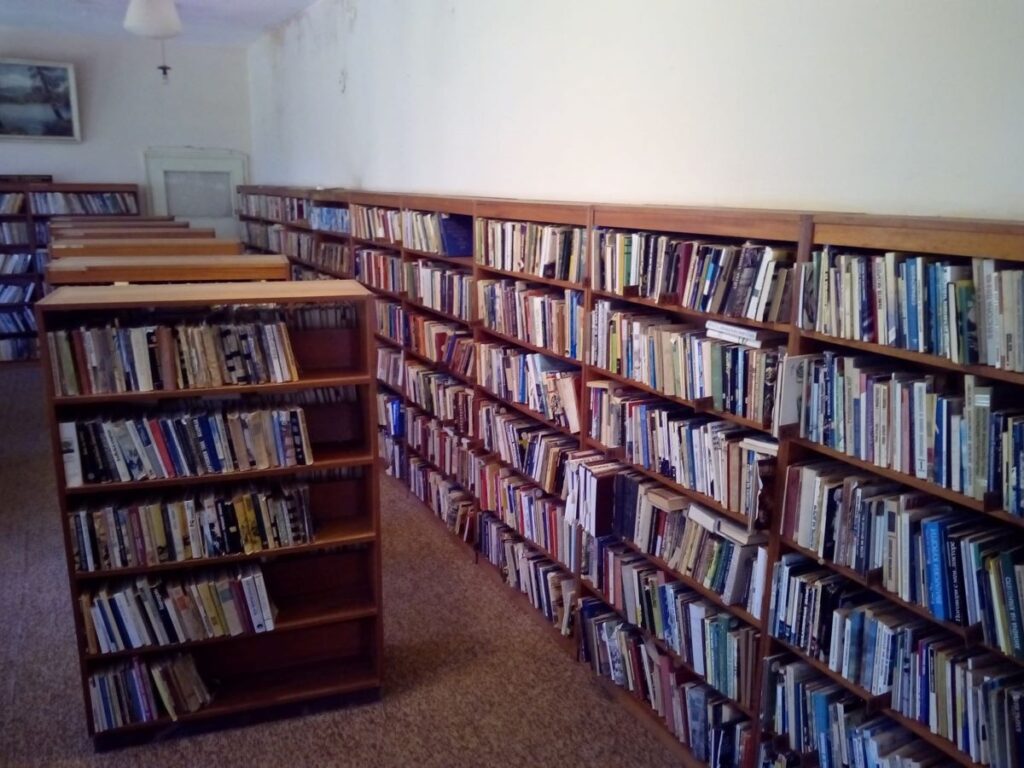
The community center also has a library, and the number of books borrowed in a year is “around a hundred,” the report states.
In the library of the community center in the village of Burya, only 17 readers visited in the entire 2023, borrowing 83 books. This village actively develops folk art, and their group participated in festivals and events, reaching as far as Montenegro last year. However, beyond folk activities, their remaining undertakings also revolve around making marteniitsi, celebrating Trifon Zarezan, March 8, and May 24.
A Modern Library-Information Center with 14 Readers
In the village of Bogatovo, 14 readers were registered for 2023, borrowing or reading 78 books. This imitation of library activities does not prevent the community center secretary, who is also the librarian, from stating in her report that efforts during the year were focused on “transforming the library into a modern public-information center.” It is evident that with only 14 readers, the library is neither modern nor a center, let alone an informational one. There’s no way it could “fulfill the tasks assigned to us by the state and society,” as the librarian notes, given that according to her own report, she averages two readers per month. The village received 16,500 BGN in subsidies, of which nearly 14,000 BGN were spent on the secretary’s salary and social security, leaving only 863 BGN for community activities.
In the village of Gradishte, the library at the community center has 13 readers. The number did not increase despite enriching the collection with 76 new books through a project by the Ministry of Culture. Here, the report begins with Babinden and continues with making marteniitsi and celebrating March 8. There are also interesting details—hosts welcomed guests from Argentina, descendants of local residents, who came to trace their roots. This visit clearly turned into a celebration for the village, alongside the commemoration of 95 years since the establishment of the local community center and a visit from a children’s singing group from Ukraine. While not much, these events managed to unite even briefly the depopulating village. For 2023, they received nearly 31,000 BGN in subsidies, most of which went to salaries and social security, with only 2,300 BGN spent on activities.
These are small and randomly selected examples from the life of community centers in the Municipality of Sevlievo, but there is no doubt that the picture is similar in other Bulgarian municipalities. The buildings of these unique institutions, which sparked enlightenment during the Bulgarian National Revival, today languish in cobwebs, suffer from cracked walls and leaking roofs, and celebrations are “outsourced” to pensioners’ clubs or local taverns because the large auditoriums cannot be heated or filled.
There Are Exceptions
The maxim that where there is a desire, there is a way undoubtedly works in the village of Lovni Dol. With only 15,000 BGN in annual subsidies, they have managed to publish a book documenting the village’s history, organize a series of local events, and attract nearly 800 readers to the library. According to the report from this community center, the increase in the number of readers is 25% compared to the previous year, which is undoubtedly a success for a small village that lacks a school.
** Pays, and Then “Everyone Just Decides for Themselves”**
According to the Law on Community Centers, these are “traditional self-governing Bulgarian cultural and educational associations in populated areas that also perform state cultural and educational tasks.”
In practice, in many small settlements, these institutions have diminishing functions and serve a single purpose: to provide a negligible salary for a single community center secretary. Activities like making marteniitsi and celebrating Trifon Zarezan, no matter how cherished they are by Bulgarians, cannot be categorized as cultural and educational tasks, even though those who understand wine know that such activities also require knowledge and culture.
According to the same law, the Minister of Culture supports the activities of community centers. This support includes methodological assistance, analysis of their condition and activities with the help of regional and municipal administrations, public announcements of projects from international donor programs, and the creation of a public register with a database. The minister can assign them the execution of state tasks related to community center activities, but as stated in the law governing the operation of Bulgarian community centers, this support comes with financial backing.
Without Control
However, no one controls how and for what purpose state subsidies are spent. The Law on Community Centers does not establish oversight over the spending of taxpayers’ money. The only obligation for the heads of community centers is to submit a report—first to the general assembly, then to the municipality in which the community center is located, and the municipality subsequently submits it to the Municipal Council, which accepts it only for information. The only sanction for a community center chair is if they do not submit a report on revenues and expenditures for the previous year to the mayor of the municipality by March 31. The sanction is administrative, ranging from 150 to 300 BGN.
Municipalities, tasked with distributing subsidies and submitting reports to municipal councils, are completely devoid of powers to intervene in the operations of community centers. They have the right to control only the additional funding for some of them, which usually occurs during the celebration of anniversaries.
The in our country that can control what is done in rural community centers with the state funds allocated to them is the State Financial Inspection Agency (ADFI). However, it monitors the legality of expense reporting rather than their appropriateness.
Thus, the legislator has granted freedom to institutions whose activities in many places cannot be considered cultural or educational. Over the years, not a single representative of the authorities has dared to even think about making changes in community centers.